


The Japanese Writing System: One Voice in Three Scripts
Few writing systems combine multiple scripts like Japanese. Kanji carries meaning, hiragana provides grammatical structure, and katakana handles foreign loanwords and emphasis. Together, they create a unique script that allows expression through meaning-based and sound-based writing.
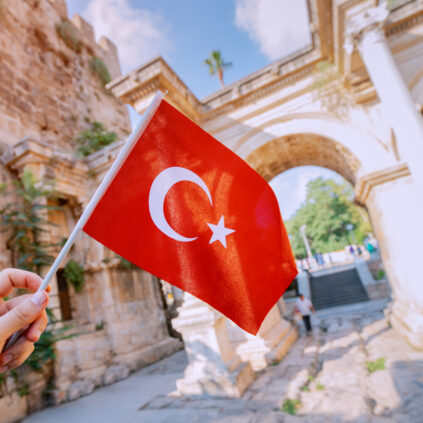
The Turkish Language: A Journey From Steppe to Istanbul
The Turkish language has undergone one of the most dramatic transformations in linguistic history. Shaped by empires, migration and reform, yet still carrying the everyday warmth and shared humor that make any language feel like home.

Vietnamese: A Tonal Language With Unique Composition
Vietnamese sounds soft and melodic to foreign ears. Beneath the melody is a highly structured tonal system built and adapted through the influence of other languages.
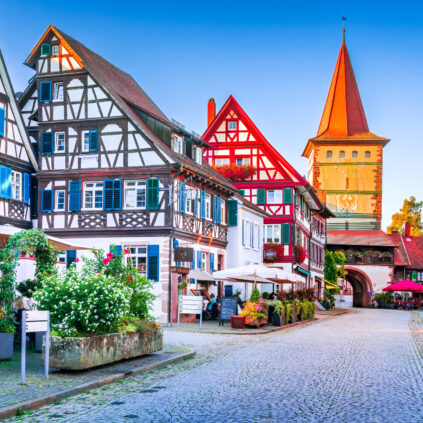
The German Language: A Dialectal Continuum
German is one of Europe’s most influential languages, but it is not a single uniform language. It is a constellation of regional dialects spoken across Austria, Germany and Switzerland, with a standardized common form that is learned in school.

How Ancient Greek Endures as the Language of Science
Many of the words used in science today were born in Greek. Mathematics, philosophy, democracy, astronomy, psychology and medicine all trace their roots to this language. Long before laboratories and universities existed, Greek thinkers were inventing vocabulary for ideas that would shape science and intellectual thought all around the world.

Zulu: One of Africa’s Most Powerful Languages
Zulu, or isiZulu, is one of Africa’s most widely spoken indigenous languages. It is the first language of more than 12 million people and understood by many more across South Africa.

The 4 Tones of Mandarin Chinese
Chinese speakers sing their words. Tones create meaning. Change in the pitch changes the word. Learn what the four main tones sound like and how they work to create words and phrases.

The Slovenian Language: Small Country with a Remarkably Complex Tongue
Slovenian is one of Europe’s smallest national languages but it carries a depth and complexity that far exceeds its size. It’s intimate, soft and its rich inflection lends itself to lyricism and poetic expression. Tucked between the Alps and the Adriatic Sea, its speakers are a multilingual, thoughtful and pragmatic society, with a deeply embedded outdoor culture.
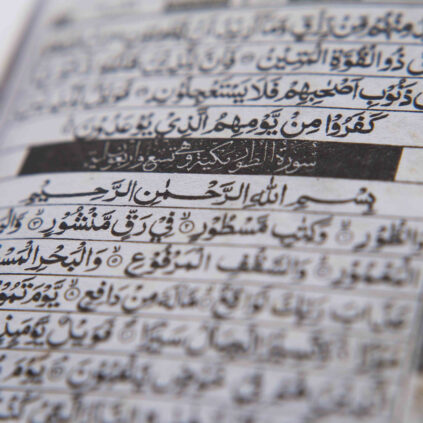
Arabic and Its Writing System: A Shared Script Across the Arab World
Arabic is spoken across more than twenty countries in the Middle East and North Africa. It functions as a language system with a shared written standard and a wide range of spoken varieties that can differ as much as Spanish and Italian.

How Linguistic Validation Interacts with Measurement Science and AI Translation Models
Linguistic validation is the localization process behind translating clinical outcome assessments. It is a discipline of its own. Clinical outcome measures are not texts. They are sensitive scientific instruments. Every word and phrase are high stakes content.


