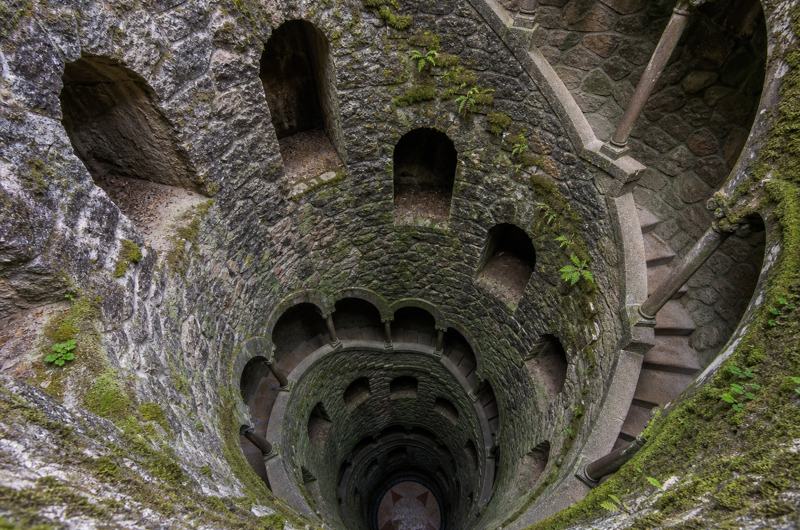
Portugal is a wonderful destination to visit and explore. There are tiled façades in Lisbon, medieval streets in Porto, whitewashed villages, spectacular 30-metre winter waves in Nazaré, golden Atlantic beaches and all along the Algarve, the mysterious inverted tower in Sintra and vineyards climbing the picturesque, steeply cascading hills of the Douro Valley. Wine has been produced there for centuries, but Port became its most famous export. It is a fortified wine brought down the Douro and aged in the cellars of Vila Nova de Gaia, across the river from Porto.
Wine in Portugal is part of the landscape, the food and the rhythm of daily life. Different regions have their own grapes and traditions, from the light vinho verde of the north to the rich reds of the Douro and Alentejo. Like the language, Portuguese wine reflects geography, history and centuries of export to the wider world.
The country is nestled along a narrow strip of land on the western edge of the Iberian Peninsula, with Spain on one side and the Atlantic Ocean on the other. You can drive from Lisbon to the Spanish border in a couple of hours.
And yet Portuguese became one of the most widely spoken languages in the world. More than 260 million people speak Portuguese, most of them nowhere near Portugal.
Today, it is heard in the streets of Lisbon, Rio de Janeiro, Luanda, Maputo and Praia. It is spoken in Europe, South America, large swaths of Africa and Asia, and most prominently in immigrant communities from Toronto to Boston to Paris and far beyond.
How did that happen?
A Brief History
The story of Portuguese begins before there was a Portugal.
When Roman armies arrived on the Iberian Peninsula, now occupied by both Spain and Portugal, in the 3rd century BCE, the region was already home to different peoples speaking different languages. Roman rule brought Latin, which gradually became the language of government, trade and public life.
It was not the refined Latin of Cicero, Seneca the Younger or Augustus Aurelius. Most people spoke the everyday Latin of soldiers, merchants, farmers and settlers. Vulgar Latin. Over centuries, that spoken language changed. Pronunciations shifted, words were shortened, and regional differences diversified it.
Then the Western Roman Empire fell apart under Romulus Augustulus.
Germanic peoples moved into the peninsula during the 5th century. In the northwest, the Suebi established a kingdom that covered much of present-day Galicia and northern Portugal. They were later taken over by the Visigoths, who ruled most of Iberia for two centuries until Muslim armies invaded it from North Africa in 711.
The rulers changed, and Latin continued to evolve into regional varieties. These would eventually become Spanish, Portuguese, Galician, Basque, Catalan and several other Romance languages.
Portuguese emerged in the northwest, in the lands that now form Galicia and northern Portugal. The language spoken there is linguistically referred to as Galician-Portuguese. For a time, Galician-Portuguese was also one of the great literary languages of medieval Iberia.
At this point, Portugal still did not exist as an independent kingdom.
The kingdom of Portugal began to form in the 12th century. Afonso Henriques, ruler of the County of Portugal, fought for independence from the neighbouring Kingdom of León, and became Portugal’s first king. He then expanded the kingdom southward.
This expansion was part of the long Christian reconquest of territories under Muslim rule. Lisbon was captured in 1147. By the middle of the 13th century, Portuguese forces had reached the Algarve, and the borders of mainland Portugal were beginning to resemble those we know today.
In the kingdom of Portugal, Galician-Portuguese mixed with Arabic and older Romance varieties that had endured under Muslim rule. Modern Portuguese contains substantial Arabic vocabulary, such as açúcar for sugar, azeite for olive oil, arroz for rice and almofada for cushion. Many begin with al-, the Arabic definite article that is permanently attached to the words now.
By the 13th century, Portuguese was used in royal documents as well as poetry and everyday records. Latin remained important in religion and scholarship, but Portuguese became the written language of the kingdom.
Meanwhile, Galician and Portuguese began to evolve along separate trajectories. Galicia remained politically tied to León and Castile and influenced by Castilian Spanish. Portugal had its own court, administration, borders and literary traditions in Portuguese.
In the 15th century, Portuguese forces captured Ceuta, a prosperous Muslim port on the North African coast. It gave the Portuguese a foothold near the entrance to the Mediterranean and access to trading networks for gold, spices and other goods from Africa. From there and in the centuries that followed, Portugal built an enormous maritime trading network. Portuguese ships were moving progressively farther down and around the coast of Africa, eventually reaching India, Southeast Asia, China, Japan and Brazil.
Portuguese became a major language of maritime trade and administration in ports separated by thousands of kilometres. That expansion also involved armed conquest, forced conversion, enslavement and colonial exploitation. And Brazil dramatically changed the scale of the language. Millions of Africans were transported to Brazil, where their labour sustained plantations, mines and city life.
In the 19th century, the Portuguese Empire began to collapse.
Brazil, its largest and richest colony, declared independence in 1822, but Portugal held on to its African territories much longer than most European powers. Beginning in 1961, it fought prolonged wars against independence movements in Angola, Mozambique and Portuguese Guinea. The cost of those wars helped provoke the Carnation Revolution of 1974, when military officers overthrew Portugal’s dictatorship. Within little more than a year, most of the remaining African colonies were independent. Macau was transferred to China in 1999, and East Timor became fully independent in 2002.
The newly independent countries kept Portuguese as an official language, partly because it provided a common means of communication among populations speaking many different African languages. They also made it their own. Writers, musicians and independence leaders used Portuguese to express experiences which, in many cases, challenged Portuguese rule.
Today, Brazil has more than twenty times the population of Portugal. She is the reason why Portuguese is one of the world’s most spoken languages.
One Language with Many Sounds
Portuguese exists in many variations, and not all are mutually intelligible.
A conversation in Lisbon does not sound like one in Rio de Janeiro, Luanda or Maputo. European Portuguese tends to compress unstressed vowels, which can make words seem to run together. Brazilian Portuguese generally gives vowels more room and has a more open rhythm. Angola, Mozambique and the other Portuguese-speaking countries have developed their own accents, vocabulary and expressions, often influenced by the African languages spoken in their proximities.
The differences are not only in pronunciation. An everyday word in Portugal may sound formal, old-fashioned or completely unfamiliar in Brazil. The same pronoun can imply different degrees of politeness, and even something as simple as asking what another person is doing can be phrased differently. Speakers usually adapt, although misunderstandings, and jokes about misunderstandings, are common.
The differences reflect different histories. Brazil’s Portuguese is infused with Indigenous and African influences. Angolan and Mozambican Portuguese also continue to develop in multilingual societies. Cape Verde and Guinea-Bissau use Portuguese alongside creoles that are rooted in Portuguese but have become the languages of home and daily life.
Most Portuguese speakers live outside Portugal, and the future of the language will continue to evolve alongside other languages in Europe and Brazil, and in Africa.
Portuguese and Spanish: Close, but Not That Close
Portuguese and Spanish are close relatives. For centuries, they developed beside one another, share much of their vocabulary and organize sentences in broadly similar ways. In written form, speakers of either language can often understand a substantial portion of its content.
But when they speak to each other, comprehension drops dramatically. Words that are similar or shared are often pronounced differently, used in different situations or have entirely different meanings.
Portuguese speakers tend to find spoken Spanish easier. Spanish has a smaller and more stable vowel system, so its words tend to sound closer to the way a Portuguese reader expects them to sound. Portuguese speakers are also frequently exposed to Spanish through neighbouring countries, travel and media. Interestingly, the reverse exposure is not as prevalent.
Learners who assume Portuguese is simply Spanish with altered spelling often become very good at speaking Portuñol—a useful improvisation, perhaps, but not quite either language.
Portuguese Voices in Music and Literature
In Portugal, the language is closely associated with fado, the melancholy music of Lisbon’s taverns and neighbourhoods. Its songs often return to longing, absence and saudade, a famously difficult-to-translate feeling somewhere between nostalgia, love and loss. Amália Rodrigues made fado famous far beyond Portugal, while contemporary singers have continued to mould it to progression of daily life.
Brazil, on the other hand, gave Portuguese an entirely different musical life. Samba, bossa nova, música popular brasileira and funk emerged from the country’s dynamic mixture of African, Indigenous and European influences. From Antônio Carlos Jobim and João Gilberto to Caetano Veloso, Gilberto Gil and countless others, Brazilian music has probably introduced more people to the sound of Portuguese than any other language medium ever has.
The African Portuguese-speaking world is equally varied. Cape Verde gave rise to morna and funaná; Angola to semba, kizomba and kuduro; Mozambique to traditions associated with both local languages and Portuguese.
Portuguese literature also travelled long world wide.
In the 16th century, Luís de Camões turned Portugal’s voyages into the epic poem The Lusiads. Centuries later, Fernando Pessoa wrote under numerous invented literary identities, each with a biography, personality and style of his own. José Saramago, Portugal’s first Nobel laureate in literature, became known for novels with long, flowing sentences that translators presumably approached with building up a certain amount of courage.
Brazil, of course, produced its own extraordinary tradition. Machado de Assis, the grandson of freed slaves, became one of the 19th century’s most inventive novelists. Clarice Lispector, born in Ukraine and raised in Brazil, transformed Portuguese into something intimate, strange and unmistakably hers.
Africa added their voices too. Mozambique’s Mia Couto transformed Portuguese with expressions and rhythms drawn from African languages. And Angola’s José Eduardo Agualusa uses it to explore memory, identity and the unsettled legacy of colonialism.
Visiting the Portuguese World
All world travel requires precaution and basic common-sense safety practices that we employ even at home.
Stories about safety in Brazil vary enormously. It depends on where you go. Safety advisories should inform a visit. especially in specific areas, but not necessarily prevent one. Brazil is huge, and travel in the country is on an entirely different scale than Portugal. Rio de Janeiro is mountains, city and ocean in one landscape, while Salvador preserves the powerful African influence on Brazilian music, food, and religion. And the Amazon, the wetlands of the Pantanal and the waterfalls of Iguaçu belong to vast wildlife territories for the adventurers.
Cape Verde also rewards some planning. Its established tourist areas are generally considered trouble-free when visitors take sensible precautions. Petty crimes do occur and visitors are advised to avoid isolated beaches without proferssional guides. The islands combine volcanic landscapes, Atlantic beaches and a rich Creole culture. Santo Antão offers mountains and green valleys, São Vicente the music of Mindelo, and Fogo a volcano rising above villages and vineyards.
Portugal offers a remarkable variety of wonderful spots to visit. The country as a whole is easy to navigate with high degree of general safety, although ordinary precautions still apply.
Every large city has its shady neighbourhoods yet still plenty of other areas to move around in and enjoy.
Obrigada por ler! (Thank you for reading!)
How Santium Contributes to This Space
Santium provides specialized translation and cross-cultural research services focused on adapting and validating scientific, medical and technical content. We deliver translated materials that work as intended across languages and cultures through translation, linguistic validation, and subject-matter specialist engagement, preserving meaning, functionality, usability, and, where applicable, measurement integrity in real-world applications and settings.
Curious About the World’s Languages?
If you found this article interesting, follow me on LinkedIn and join our newsletter to receive future editions. In the Santium Language Series, I explore interesting traits of the world’s languages, from the most widely spoken to obscure, introducing their structure and word formation to cultural nuance and their role in social norms.
Stay connected and don’t miss the next edition!

|
Thank you for signing up. |


Monika Vance
Managing Director | SANTIUM
My work sits at the intersection of linguistics, scientific and medical translation, psychometric measurement, and multilingual operations, where terminology, usability, and regulatory context must align. I write about scientific and medical translations, psychometrics, languages, patient-centred research and the operational challenges that inevitably come with them. I also teach translators how to properly translate and validate complex psychometric instruments to hone their expertise in linguistic validation.