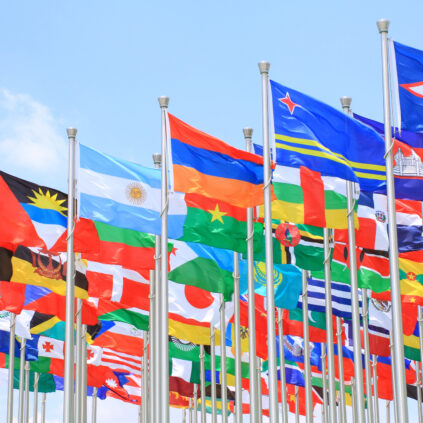
Spain is divided into 17 autonomous communities and two autonomous cities on the north coast of Africa, Ceuta and Melilla. Each community is made up of several provinces with their own councils that coordinate services across municipalities. Superficially, its structure is like that of the United States, but constitutionally different.
For clarity, in the United States, individual states are constituent parts of a federation. There, the federal government has only the powers assigned to it by the Constitution, while other powers remain with the states. Spain’s autonomous communities exercise powers granted within a single Spanish constitutional state. Their powers differ from one community to another, and the central government retains a stronger constitutional position. Spain can also reorganize the distribution of authority through national constitutional and statutory processes in ways that the U.S. federal government cannot impose on any of its states.
The arrangement dates from Spain’s transition to democracy and gives the country a more decentralized structure than those of its European counterparts. Each autonomous community has its own elected parliament and government and exercises authority over areas such as education, healthcare and culture, although the exact division of powers varies with size, population, economic power, and so on. They are not independent states, but neither are they administrative provinces.
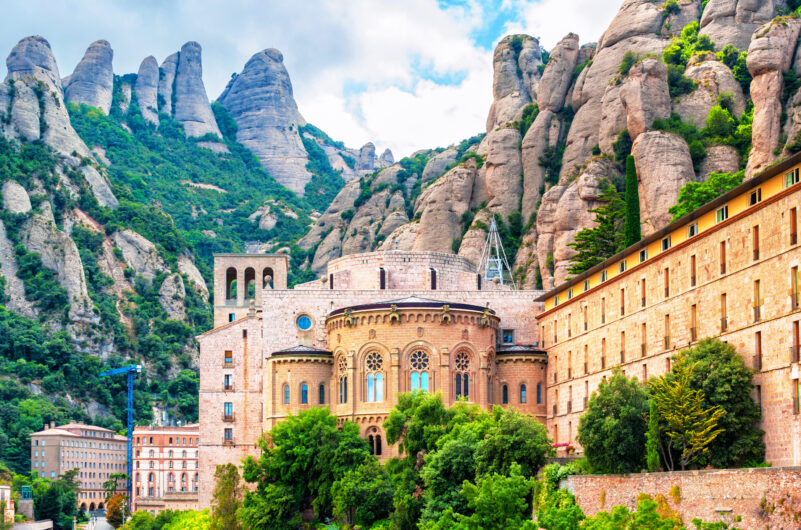
Catalonia occupies the northeastern corner of Spain, between the Mediterranean coast, the Pyrenees and the border with France. It has a population of approximately 8.2 million people as of January 2026. That makes it more populous than several European countries, including Denmark, Finland and Slovakia.
Its capital, Barcelona (locally pronounced as Barthelona), is Spain’s second-largest city and one of the Mediterranean’s major commercial and cultural centres. Catalonia is firmly a part of Spain, but it has also retained a distinct historical identity, its own institutions and a language that developed separately from Spanish.
The language is Catalan.
A Brief History
Spain, as a whole, has a long, arduous history, and it did not adopt its modern constitution as we know it today until 1812. Before Spain became a unified country, the Iberian Peninsula was divided among several independent kingdoms and crowns. The main Christian territories included the Crown of Castile, the Crown of Aragon, the Kingdom of Navarre, and the Kingdom of Portugal. The south also included dynastic Muslim-ruled territories, with the Emirate of Granada lasting until 1492.
The Mediterranean coast of what is now Catalonia was settled by Iberian peoples during the first millennium BCE, then colonized by Greeks in the 6th century BCE, then by Carthaginians in the 3rd century BCE and later integrated into the Roman Empire. Roman rule left the region developed, equipped with roads, cities, governing laws, and fluent in Latin. Catalan would eventually develop from the varieties of spoken Latin used in this northeastern corner of the Iberian Peninsula.
After the collapse of the Roman Empire, the territory was under Visigothic and Muslim rule. During the 8th and 9th centuries, the Frankish rulers north of the Pyrenees established a chain of frontier counties along the southern edge of their empire. Known collectively as the Spanish March, these counties included Barcelona, Girona and others that would gradually become less dependent on the Frankish monarchy.
The County of Barcelona eventually became the most powerful of them. In the 12th century, the marriage of Count Ramon Berenguer IV of Barcelona and Petronilla of Aragon joined the Catalan counties and the Kingdom of Aragon under one dynasty. The resulting Crown of Aragon was a collection of territories that shared a monarch, but each retained its own laws and institutions.
Over the following centuries, the Crown of Aragon expanded across the Mediterranean. Catalan merchants, administrators and settlers travelled to Valencia, the Balearic Islands, Sicily, Sardinia and other territories. This is likely why Catalan is still spoken in Valencia, Mallorca and the Sardinian city of Alghero.
Catalonia also developed a tradition of representative government. Its medieval parliament, the Catalan Courts, negotiated taxation and legislation with the Crown of Aragon. The Diputació del General, established in the 14th century to administer decisions of the Courts, became the historical predecessor of today’s Generalitat, the government of Catalonia.
The crowns of Aragon and Castile joined their kingdoms following the marriage of Ferdinand of Aragon and Isabella of Castile in the 15th century, though their territories still retained separate laws and institutions. Ferdinand and Isabella strategically expanded their authority across the Iberian Peninsula. Their conquest of Granada in 1492 ended the last Muslim-ruled kingdom there. To buffer the threat of France invading Spain, Ferdinand later annexed most of Navarre, a Pyrenean kingdom located in what is now northern Spain and southern France. Ferdinand and Isabella’s uncompromising reign laid important foundations for the Spanish monarchy.
The territories that Ferdinand and Isabella governed remained constitutionally distinct for the next two centuries until after the War of the Spanish Succession. In 1714, Barcelona fell to the forces of Philip V, the first Bourbon king of Spain, and the Nueva Planta decrees subsequently abolished Catalonia’s traditional governing institutions and brought it under a more centralized Spanish administration.
During the 19th century, Catalonia became one of the earliest and most heavily industrialized parts of Spain. Textile manufacturing transformed Barcelona and surrounding cities, attracting workers from other parts of Spain and producing a large urban commercial class. Industrialization also helped support the Renaixença, a cultural revival that restored Catalan to literature, publishing and public intellectual life after a long period in which Spanish had dominated formal institutions.
Catalonia regained a degree of self-government during the Second Spanish Republic in the 1930s, when the modern Generalitat was restored, but that autonomy ended in 1939 after the Spanish Civil War. Under Francisco Franco’s right-wing Nationalist dictatorship, Catalan institutions were abolished, and the public use of Catalan was heavily restricted, particularly in government and education.
Following Franco’s death in 1975 and Spain’s transition to democracy, the Generalitat was restored. The 1978 Spanish Constitution created the present system of autonomous communities, and Catalonia again acquired an elected parliament and government. Catalan returned to schools, administration, broadcasting and daily life in parallel to Spanish.
Catalonia’s history explains why the community is both an integral part of Spain and a region with a strong institutional and linguistic identity.
Catalan: A Romance Language of Its Own
Catalan and Spanish are perceived to have a parent-and-child relationship. Both Spanish and Catalan developed from the spoken Latin brought by Roman soldiers to the northeastern Iberian Peninsula under Roman rule. Like French, Italian, Portuguese and Romanian, they also belong to the Romance language family. However, Catalan is its own language and very distinct from Spanish. It evolved along a different trajectory from Spanish. And only later did the languages influence one another through centuries of contact under the crowns of Castile and Aragon, and through generational contact thereafter.
Catalan’s position within the Romance family is especially interesting because it sits near the boundary between the Iberian and Gallo-Romance worlds. Many of its words resemble Spanish, while others are closer to French or Occitan, the language historically spoken across much of southern France.
For example, the Catalan word for “cheese” is formatge, similar to French fromage, while Spanish uses queso. “To speak” is parlar in Catalan and Occitan, compared with hablar in Spanish. “Night” is nit in Catalan, closer to French nuit than to Spanish noche.
Written Catalan appeared during the Middle Ages and became a major language of administration, commerce, philosophy and literature within the Crown of Aragon. Its use spread with merchants and settlers to Valencia, the Balearic Islands and parts of the Mediterranean. That historical expansion is still present in the language’s spoken geography today.
Catalan Beyond Catalonia
Catalan takes its name from Catalonia, but the language extends well beyond the borders of its parent region.
It is spoken across a broad arc of the western Mediterranean. In Spain, it is also used in the Balearic Islands (Mallorca and its surrounding islands), much of the Valencian Community, a narrow strip of eastern Aragon known as La Franja, and a small area of Murcia. It is also the official language of Andorra, is spoken in the French territory often called Northern Catalonia, and also in the city of Alghero on the Italian island of Sardinia.
This distribution is the remnant of Isabella and Ferdinand’s medieval expansion. As the Crown of Aragon extended its control across the Mediterranean, settlers from Catalan-speaking territories moved into these regions. Their speech mixed with locally spoken varieties of Spanish and developed locally over the following centuries, producing regional dialect varieties that remain recognizably related but are not identical.
Catalan’s legal position changes within each border. In Andorra, Catalan is the sole official language. In Catalonia, the Valencian Community and the Balearic Islands, it is co-official with Spanish. In France and Italy, it has more limited protection and a much smaller public role.
The number of people who can understand Catalan is larger than the number who regularly speak it. Across the Catalan-speaking territories, knowledge and everyday use vary considerably by region, generation and setting.
This uneven geography produced differences in vocabulary, pronunciation and the preferred name for the language.
Regional Dialects
Catalan is broadly divided into two dialect groups: eastern and western. The boundary does not follow modern political borders, but it offers a useful way to understand Catalan’s internal structure.
Eastern Catalan includes the varieties spoken in central and northern Catalonia, the Balearic Islands, Northern Catalonia in France, and Alghero in Sardinia. Western Catalan includes the varieties spoken in western Catalonia, La Franja in Aragon, and most of the Valencian Community.
Each of these contains smaller local varieties. Balearic, for example, includes Mallorcan, Menorcan and Ibizan, while Valencian is divided into several regional forms of its own.
There are distinctive ways to tell the difference. In much of eastern Catalan, unstressed a and e are reduced to a neutral vowel, while unstressed o may sound closer to u. Western varieties generally preserve clearer differences between these vowels. So, the same written word may sound noticeably different between Barcelona and Valencia despite identical spelling.
Regional variation also appears in articles, pronouns, verb endings, and everyday vocabulary. In the Balearic Islands, for example, speakers commonly use the articles es, sa, and ses alongside the standard forms el, la, and les. For example, the famous Mallorcan mountain road, routinely used in luxury European sports car commercials, Sa Calobra, “the serpent,” translates to la culebra in Spanish.
Common words can change, too. A child may be called nen in much of Catalonia and xiquet in Valencia. “To leave” may appear as sortir in central Catalan and eixir in Valencian. These differences are generally understood among speakers of different dialects, but should be considered when translating content for Catalan speakers, especially children. For the general public, geography matters.
Catalan has a shared written standard, with various spoken forms, and standardization of Catalan has had to accommodate each with its own history and local norms.
Standardization of Catalan
By the 19th century, when Catalan had returned strongly to literature and public culture through the Renaixença, its spelling and grammar still varied considerably from one writer and region to another. If Catalan was going to live on as a modern language used in education, publishing and administration, then it needed shared rules for vocabulary, grammar and writing it.
The central figure in that work was the linguist Pompeu Fabra. His spelling reforms, dictionary and 1918 grammar established the foundation of modern standard Catalan. Fabra drew mainly on central Catalan while also considering historical usage and other regional forms. He aimed to allow local speech to continue to evolve, but to create a consistent written language that could be used across Catalan-speaking territories.
Today, the Institut d’Estudis Catalans maintains the general Catalan standard, while the Acadèmia Valenciana de la Llengua establishes official Valencian norms. The two standards belong to the same linguistic system, but allow regional differences in vocabulary, pronunciation and grammar. Hence, a text written in Barcelona and one written in Valencia can both be considered standard Catalan even though they are distinctly local.
Catalan has frequently been at the centre of the political friction between Catalonia and the Spanish state because language policy is closely tied to self-government, education and public authority. And, its history and geographic reach extend well beyond Catalonia.
After the Franco dictatorship, it regained official status alongside Spanish, but that did not end the debate about which language to use in classrooms, public administration, broadcasting and publishing. Courts and governments have continued to negotiate where protection ends and where it begins.
Today, the basic arrangement is that both Catalan and Spanish hold official status, while Catalan retains a central role in Catalonia’s institutions. The argument over how a bilingual system should operate may be eventually settled through common practice and acceptance rather than a polarizing and disruptive official vote.
How Santium Contributes to This Space
Santium provides specialized translation and cross-cultural research services focused on adapting and validating scientific, medical and technical content. We deliver translated materials that work as intended across languages and cultures through translation, linguistic validation, and subject-matter specialist engagement, preserving meaning, functionality, usability, and, where applicable, measurement integrity in real-world applications and settings.
Curious About the World’s Languages?
If you found this article interesting, follow me on LinkedIn and join our newsletter to receive future editions. In the Santium Language Series, I explore interesting traits of the world’s languages, from the most widely spoken to obscure, introducing their structure and word formation to cultural nuance and their role in social norms.
Stay connected and don’t miss the next edition!
About the Author
Monika Vance | Managing Director | SANTIUM
My work sits at the intersection of linguistics, scientific and medical translation, psychometric measurement, and multilingual operations, where terminology, usability, end-user experience, and regulatory context must align. I write about scientific and medical translations, psychometrics, languages, patient-centred research and the operational challenges that inevitably come with them. I also teach translators how to properly translate and validate complex psychometric instruments to hone their expertise in linguistic validation.

|
Thank you for signing up. |


References
Boletín Oficial del Estado. (1978). The Spanish Constitution. Government of Spain.
Consorci per a la Normalització Lingüística. (n.d.). Les varietats del català.
Generalitat de Catalunya. (n.d.). History of the Generalitat.
Generalitat de Catalunya. (n.d.). Legal framework of the Catalan language.
Generalitat de Catalunya. (n.d.). The Nova Planta regime. Generalitat de Catalunya. (n.d.). Origins and history of the Catalan language.
Institut d’Estudis Catalans. (n.d.). Classification of Catalan dialects.
Institut d’Estudis Catalans. (n.d.). Notice on the Institut d’Estudis Catalans.
Ministry of Culture. (1716). Nova Planta Decree of the Principality of Catalonia. Government of Spain.
Pompeu Fabra University. (n.d.). Pompeu Fabra and the Institut d’Estudis Catalans.
Monika Vance
Managing Director | SANTIUM
My work sits at the intersection of linguistics, scientific and medical translation, psychometric measurement, and multilingual operations, where terminology, usability, and regulatory context must align. I write about scientific and medical translations, psychometrics, languages, patient-centred research and the operational challenges that inevitably come with them. I also teach translators how to properly translate and validate complex psychometric instruments to hone their expertise in linguistic validation.