


The World’s Whistled Languages
Most languages are spoken, some are signed, and over 80 of the world’s languages have formally recognized whistled versions. Many sound like bird songs. Human speech contains far more acoustic detail than is actually necessary for comprehension. Even with minimal signal, trained listeners can interpret entire sentences.

The Korean Language and Its Scientifically Designed Alphabet
What if an alphabet were designed the way engineers design engines? In the Korean writing system, the shapes of the letters actually reflect how the human mouth produces each sound. In the 15th century, King Sejong introduced an alphabet that linguists consider one of the most logical in the world, and so simple that any person can learn it in just one day.

The German Language: Its Precise Structure Beneath the Dialects
German is one of Europe’s most influential languages. It can squeeze an entire idea into one super-long word. This efficiency comes from a highly disciplined structure that doesn’t map well to that of its cousin, English. German’s über-high precision makes a high-quality translation of complex technical content a work of art.

Ice Hockey and Football (Soccer): Pronouncing Foreign Players’ Names Like a Pro
Every language has its own phonological map. Its sound system differs from every other. And the pronunciation of foreign names is mapped onto the native sound system of the person pronouncing them. Some of the most famous names in professional sports today get routinely mangled by broadcasters and fans for so long that they become the athletes’ adopted names.

Xhosa: The Melodic Click Language That Reads Like Poetry
Most languages borrow words from their neighbors. Xhosa borrowed something far stranger: an entirely different way of using the human mouth.

Hindi in Clinical Trials: Making Hindi Patient-Friendly
Hindi is recorded as the mother tongue of more than 43% of India’s population. Yet, there appears to be a steady decline in Hindi translations of COAs while other major Indian languages keep going strong. What does that tell us about Hindi translations that have reached clinical trial sites?

English: The World’s Lingua Franca
English is so common that we tend to take it for granted. From a foreigner’s perspective, it is a very “cool” language: incredibly rich, exceptionally adaptable, and effortlessly flexible. It gained power through everyday use across the British Empire, enabling conversations among people from distant parts of the globe.
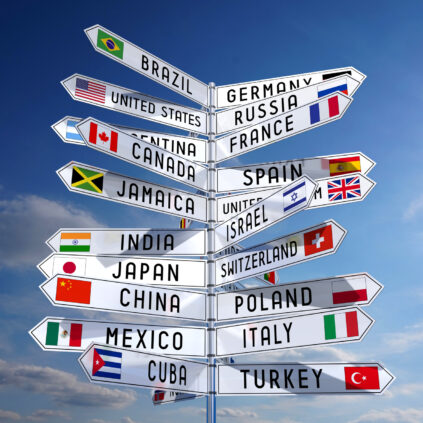
Cultural Difference: The Interpretive Lens of Language and Behaviour
The greater the geographic distance between two countries, the greater their cultural differences. The greater the cultural differences, the higher the risk of misinterpretation of language and behaviour. Cultural distance governs the complexity of linguistic adaptation of materials destined to be used in other countries.

Ancient Egyptian Language and the Logic of its Hieroglyphs
Ancient Egyptian is usually introduced as a language of tombs, temples, and mysterious symbols. Behind its pictorial beauty lies an intellectually sophisticated system that combined sound, meaning, and visual design within one of the most powerful writing traditions of the ancient world.
One Version or More? When to Ask for a Harmonized Translation
Not every set of “related” languages can be harmonized. Harmonization only makes sense under certain conditions, and it should never be simply a shortcut for reducing translation costs. Understanding when harmonization makes sense will help you make better operational decisions for your high-stakes projects.


