


The Accent from Nowhere: How “Received Pronunciation” Became the Voice of Britain
You may not know the term Received Pronunciation, but you have almost certainly heard it. Once considered the “correct” way to speak British English, RP implied better education, authority and elite social class. Today, its modern descendant sounds very different from the voice that once ruled public communication and entertainment.

How to Adapt Proverbs Without Changing What You Measure: A PANSS Case Study
When a proverb becomes part of an assessment, it retains its role as a cultural expression, but it also becomes a measurement stimulus. An item designed to generate evidence about a particular aspect of cognitive functioning: abstract thinking.
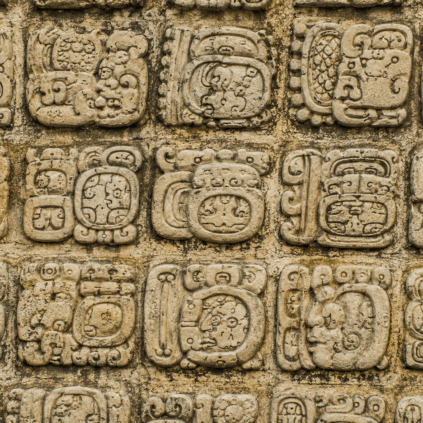
The Mayan Script: How Linguists Rediscovered the Maya Ancient Civilization
From the reconstruction of the Proto-Mayan language to the decipherment of ancient glyphs, reverse-engineering through modern Mayan languages unlocked one of the richest historical records in the Americas. It revealed people, cities, arts, sciences, and the vibrant culture behind one of history’s most fascinating civilizations.

How Proverbs Connect Language, Culture and Cognition
Proverbs sit at the intersection of language, culture and cognition. They preserve collective memory, vary in the level of abstract reasoning, and reflect the cultural contexts that formed them, offering enduring wisdom as well as insight into past ways of life, values and survival.

The Bird Song: A Language with Grammar
As a high school student, Toshitaka Suzuki bought a pair of binoculars and began watching birds along his long walks through the forests of Karuizawa, a resort town in the mountains near Nagano, Japan. One species, the tiny Shijukara, kept drawing his attention. Years later, observing this bird led to one of the most intriguing discoveries in the study of language.

The Tibetan Language: Preserving Meaning Across Distance, Evolving Dialect, and Generations
A translation can be accurate and still be misunderstood. Tibetan scholars identified this problem centuries ago. On one of the world’s highest plateaus in one of the harshest remote environments on Earth, Tibetans built an extraordinarily sophisticated educational system and a method designed to test understanding across languages and generations. This method may be history’s closest analogue to what we call Linguistic Validation today.

Ukrainian: The Language Wrapped in a Passionate Culture
There is a word in Ukrainian — “туга” (tuha) — that doesn’t have a direct English equivalent. It’s not quite sadness. It’s not nostalgia. It’s like the feeling you get every now and then on a grey drizzly day when something beautiful is absent but you can’t quite name what. Kind of a longing. Poetic, specific, a little melancholy in the best possible way.
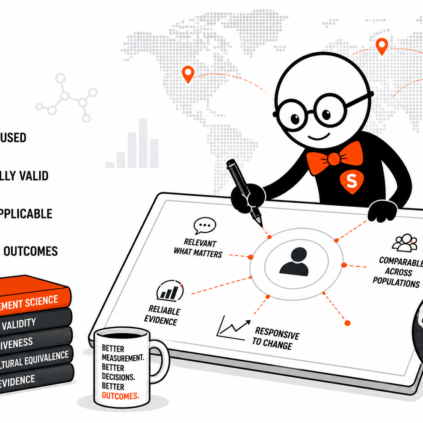
Designing Clinical Outcome Assessments for the Next Generation of Global Clinical Trials
Designing clinical outcome assessments is a well-established science. The major regulatory agencies largely converge on that science, although they differ in how explicitly they describe it and how formal their qualification pathways are. The future of clinical outcome assessments is about building better measurement systems.

Persian: The Language of the Scholars Who Gave Europe Its Renaissance
The Greeks gave the ancient world philosophy, geometry and formal logic. While Europe lay shrouded in the Dark Ages, Persian scholars were building on Greek knowledge and making brilliant contributions to mathematics, chemistry, geography and medicine alongside their Arab counterparts. Then, a powerful translation movement sparked the Renaissance era, and knowledge, art and philosophy began to flow again into the rest of Western Europe.

Hindi: The Controversial Language Spoken by Half a Billion People
Step into northern India, and Hindi is everywhere. You’ll hear it in markets and classrooms, government offices, and in Bollywood films that travel far beyond India’s borders. It is the language of one of the world’s great civilizations, the administrative backbone of the world’s most populous democracy, and also one of the most politically contested languages on earth.


