Spread across southern Mexico and Central America are roughly thirty related languages spoken by millions of Maya people today. To most visitors, they are collectively “Mayan.” To a linguist, they form one of the most remarkable language families in the world that has continuously evolved for thousands of years. Together, these languages preserve clues to Maya history, mathematics, astronomy, and culture that stretch back thousands of years.
The languages belong to the same family, but they are not interchangeable, nor in many cases mutually intelligible. A speaker of K’iche’ in the Guatemalan highlands does not necessarily understand a speaker of Yucatec Maya in Mexico. Their languages share an ancestry – much like French, Spanish, and Italian do – but centuries of migration, geography, political separation, and ordinary linguistic change have carried them in different directions.
The Maya were never organized as a single empire with one language imposed from its core. Their world was made up of cities, kingdoms, trade routes, farming communities, and regional centres spread across mountains, forests, limestone plains, and coastal lowlands.
The languages developed along those routes and boundaries, and their differences are part of the historical record.
One family, many languages
When linguists describe the Mayan languages as a language family, they do not mean a collection of languages that happen to be spoken in the same region. They mean the languages descend from a common ancestor.
That ancestral language, known as Proto-Mayan, was probably spoken several thousand years ago. It was never recorded, but traces of it remain in the vocabulary, sounds, and grammatical structures of the languages spoken today.
The family now includes roughly thirty living languages. K’iche’, Q’eqchi’, Kaqchikel, and Yucatec Maya are spoken by large populations, while others are spoken within much smaller communities. Each has developed its own sound system, grammar, vocabulary, and literary traditions.
Linguists reconstruct Proto-Mayan by comparing patterns across its descendants. Related languages often share similar words with recurring sound differences, and those patterns provide important clues. They can reveal how pronunciation changed as the languages separated and evolved.
The process is similar to reconstructing a family tree from living relatives when records of the earliest generations are no longer accessible.
The Maya did leave writing behind, although not in Proto-Mayan.
Deciphering the Mayan script
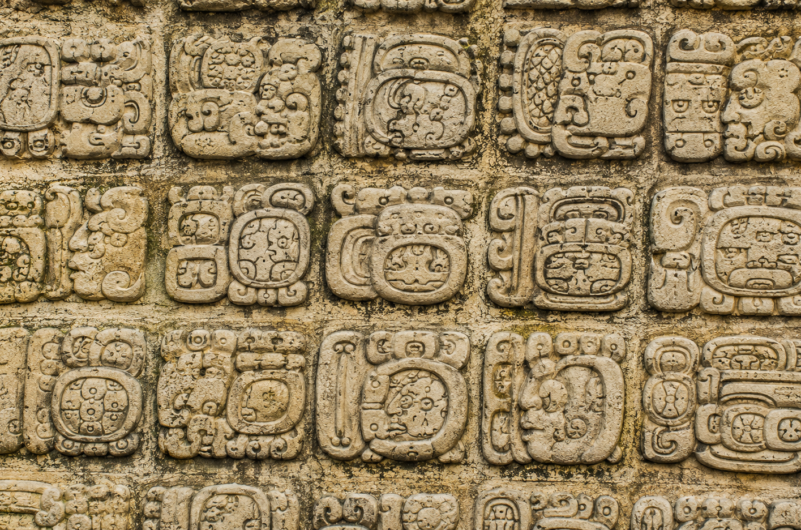
The ancient Maya left behind thousands of written records. Stone monuments, temple stairways, painted ceramics, jade ornaments, and folded bark-paper books were covered with intricate glyphs. Together, they form one of the richest collections of writing from the ancient Americas.
Like Egyptian hieroglyphs before the Rosetta Stone was deciphered, no one could read Mayan glyphs for centuries. The turning point came in the 20th century. By then, archaeologists had documented thousands of Maya inscriptions, and many of the leading scholars of the day believed the glyphs represented ideas in symbols and pictures.
In the early 1950s, a young Russian linguist named Yuri Knorozov began studying the script using photographs, drawings, and published copies of inscriptions. He had never visited a Maya archaeological site.
His approach resembled Champollion’s decipherment of Egyptian hieroglyphs on the Rosetta Stone, but Knorozov faced an additional difficulty: he had no Maya equivalent of the Rosetta Stone, with the same text presented in another language that he could already read.
Knorozov suspected that the prevailing theory was wrong. His training in structural linguistics taught him to examine writing as a system for encoding language. A script can represent whole words, syllables, consonants, vowels, individual sounds, or some combination of them. Hence, he proposed that many of the glyphs probably represented syllables that could be combined to reproduce the sounds of spoken words.
His most important evidence drew on a 16th-century manuscript by the Spanish bishop Diego de Landa. De Landa had asked Maya scribes to provide the equivalents for the letters of the Spanish alphabet. The list appeared confused because the signs the scribes produced did not work like individual alphabetic letters, and many scholars had dismissed the list as unreliable. Knorozov recognized that de Landa had misunderstood what his scribes gave him.
Though he still could not read the script, his insight provided a model he could test. He used the syllabic values recorded by de Landa, searched for recurring combinations of signs, and tested whether the resulting sounds corresponded to words and grammatical patterns known from modern Mayan languages. He also examined the contexts in which particular glyphs appeared. When the same proposed readings continued to work in different words, passages, and documents, the accumulating evidence suggested that his model was sound. His key achievement and contribution to the Mayan script breakthrough was the development of a reproducible method that turned proposed readings into linguistic hypotheses that could be confirmed, modified, or rejected.
Initially, Knorozov’s work met considerable resistance, especially from scholars who had spent years viewing the glyphs as symbols or calendrical signs. Other researchers, however, began testing and extending his phonetic readings. As names, verbs, titles, grammatical endings, and place names became identifiable, the evidence grew increasingly difficult to dismiss.
During the following decades, archaeologists, linguists, epigraphers, and art historians built on this work. They established that most Classic-period inscriptions were written in a prestigious language closely associated with the Ch’olan branch of the Mayan family, while also containing regional and multilingual features. The script is now accepted as logosyllabic, using both word signs and a large inventory of phonetic syllabic signs.
The Maya had left extensive written accounts of their civilization that took years to read and translate.
What the inscriptions revealed
The monuments bearing the inscriptions became historical records. They preserved the names of kings and queens, documented births and deaths, celebrated military victories, recorded political alliances and royal marriages, and traced dynasties across multiple generations. Cities that had once seemed isolated were revealed to be connected through diplomacy, trade, rivalry, and war.
The inscriptions also transformed our understanding of Maya science and mathematics. But perhaps most remarkably, the inscriptions allowed the Maya to speak for themselves. Rather than reconstructing their history solely through archaeology, scholars could now read accounts written by the people who lived it, preserving voices that were silent for more than a thousand years.
Rulers became real people
Before decipherment, many Maya rulers were known only through the monuments associated with them. Once their names could be read, they emerged as historical figures with parents, spouses, children, rivals, accession dates, military campaigns, and carefully constructed public identities.
At Palenque, for example, inscriptions revealed the life of K’inich Janaab’ Pakal, who became king as a child and ruled for nearly seventy years. His monuments record his ancestry, accession, ceremonial duties, and death.
The inscriptions also revealed the political importance of Maya women. Queens arranged dynastic marriages, performed major ceremonies, acted as regents, and sometimes ruled in their own right.
A world of rivalry and war
The older image of the Maya as a largely peaceful civilization devoted to astronomy and ritual was overwritten. The Maya world was a connected landscape of kingdoms competing through warfare, diplomacy, tribute, and strategic marriages. Their cities were part of regional systems of power.
The inscriptions recorded military campaigns, raids, captured rulers, shifting alliances, and long rivalries between powerful cities. Some monuments show defeated enemies kneeling beneath victorious rulers.
The ballgame was more than just sport
Ball courts are among the most consistent features of Maya cities, but the game belonged to a much broader political and religious world.
The Maya ballgame was unlike any modern sport. It was played with a solid rubber ball that could weigh several kilograms, players were generally not allowed to use their hands or feet, instead striking the ball with their hips, thighs, shoulders, or forearms to keep it in play. Stone courts were built throughout the Maya world, from small communities to major cities, reflecting the game’s widespread importance.
The inscriptions and accompanying artwork show that these matches were closely connected with ritual, diplomacy, royal ceremonies, and mythology. Important games could commemorate political events, reinforce alliances, or symbolize the struggle between life and death described in Maya creation stories.
The ballgame entertained spectators, but it also expressed religious beliefs, political authority, and the identity of the communities that played it.
Astronomy supported political authority
The inscriptions also transformed our understanding of Maya science. Their observations of the Sun, Moon, Venus, and other celestial bodies formed part of a broader system connecting astronomy with agriculture, timekeeping, ritual, and government.
Rulers timed ceremonies to important calendar and astronomical events, placing their reigns within much longer cycles of time than initially theorized. By presenting themselves as the people capable of interpreting and maintaining those cycles, they reinforced their political legitimacy.
Mathematics and astronomy helped organize public life, agricultural activity, religious observance, and royal power.
The Maya were among the few civilizations to independently develop the concept of zero, incorporating it into a sophisticated base-20 numbering system. It became an essential part of their mathematical system, enabling the precise calculations behind their calendars and astronomical observations.
The famous Mayan calendar that organized an entire society
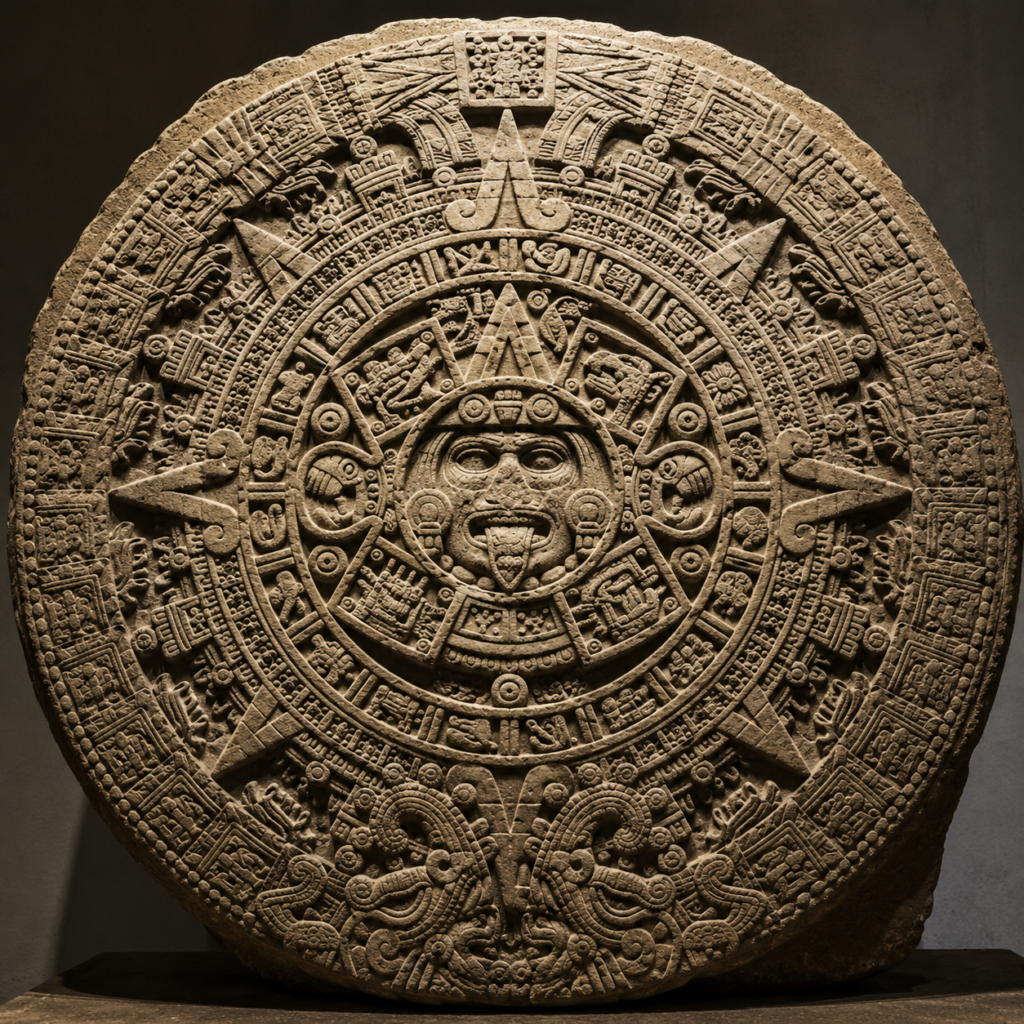
The Mayan calendar is perhaps the best-known artifact of this civilization. But it was not calendar like we know it. It was a system of interlocking calendars, each serving a different purpose.
The calendar connected mathematics, astronomy, agriculture, religion, and political authority into a single framework. Observations of the Sun, Moon, Venus, and other celestial bodies helped determine the timing of planting and harvesting, religious festivals, and royal ceremonies.
To record historical events spanning centuries, the Maya developed the Long Count, a continuous count of days from a fixed starting point. Unlike the repeating calendars used for daily life, the Long Count allowed them to document births, ruler accessions, victories, and other significant events with incredible precision. This is also where the Maya’s development of the concept of zero became essential.
By linking important events to established calendar cycles, Maya rulers reinforced both their legitimacy and their place within a much larger cosmic order.
Some of you may remember the Maya calendar because of the widely publicized prediction that the world would end on December 21, 2012. In reality, no ancient Maya inscription foretold an apocalypse. The date only marked the completion of one cycle in the Long Count calendar and the beginning of another, much like the transition from one millennium to the next.
Buildings had names and recorded histories
The Maya built their pyramids and temples without iron tools, wheeled transport, or large animals to move stone. Most were constructed from locally quarried limestone, shaped with stone tools, carried by human labour, and covered with plaster that could be painted in bright colours. The pyramid was generally a raised platform with excellent acoustics, with a temple, shrine, or ceremonial room at the top.
Maya rulers often enlarged an existing pyramid by enclosing it within a larger one and preserving the earlier structure inside. Archaeologists sometimes tunnel through several construction phases before reaching the oldest temple at the centre. A generational record of construction.
The inscriptions record who commissioned a building, when it was completed or dedicated, and the ceremonies performed to usher it into use. Some architectural spaces even had their own names. At Palenque, for example, dedication texts identify specific buildings and connect them with rulers, dynastic events, and mythological history.
The cities were vibrantly colourful
Visitors to Maya archaeological sites today see only weathered limestone. When they were inhabited, the cities looked very different. Temples, palaces, sculptures, and plazas were coated with smooth plaster and painted in vivid colours, including reds, blues, yellows, and whites.
Murals decorated palace walls, sculptures were brightly painted, and carved inscriptions stood out against colourful backgrounds. Centuries of exposure to the elements have erased most of these pigments, leaving behind the bare stone familiar to modern visitors.
Engineering water in a seasonal landscape
The Maya built many of their largest cities in regions with few permanent rivers, forcing them to become skilled water engineers. They constructed reservoirs, canals, dams, and drainage systems to capture and store rainwater during the wet season for use throughout the dry months.
At sites like Tikal, archaeologists have even identified sophisticated filtration systems using quartz and zeolite, which are minerals still used in modern water treatment. Although the inscriptions say relatively little about the engineering itself, they frequently record the rulers who commissioned major public works and the ceremonies associated with important construction projects.
Together, archaeology and the written record reveal that managing water was an essential responsibility of Maya leadership.
Trade reached far beyond the Maya world
The Maya were accomplished traders. Archaeology and inscriptions show that goods travelled over long distances through dynamic networks connecting cities across Mesoamerica.
Obsidian from the Guatemalan highlands, jade from the Motagua Valley, marine shells from the Caribbean and Pacific coasts, cacao, salt, feathers, and finely crafted ceramics all circulated among Mayan communities.
These trade routes were channels for spreading ideas, artistic styles, technologies, and religious traditions.
Chocolate was a luxury
Chocolate has become one of the Maya’s most recognizable legacies, but it looked very different from the sweet confection we know today.
The Maya prepared cacao as a bitter, often frothy drink, sometimes flavoured with chilli, vanilla, flowers, or other local ingredients. It was consumed during royal ceremonies, diplomatic gatherings, and religious rituals, and it frequently appears in painted scenes on ceramic vessels.
The inscriptions identify both the owners of these vessels and, in some cases, the cacao they once contained. Cacao beans also served as a valuable commodity and were used in trade and tribute, making chocolate an important part of Maya economic and political life.
The Maya civilization is often referred to in the past tense. They no longer exist as kingdoms, nor do they practice all of their ancient traditions, but they are very much present and living.
Today, Mayan languages are spoken in homes, schools, markets, courtrooms, government offices, radio stations, and increasingly online. They continue to evolve as speakers create new words for technologies, sciences, and public life. Like every living language, they evolve to remain relevant and meaningful.
How Santium Contributes to This Space
Santium provides specialized translation and cross-cultural research services focused on adapting and validating scientific, medical and technical content. We deliver translated materials that work as intended across languages and cultures through translation, linguistic validation, and subject-matter specialist engagement, preserving meaning, functionality, usability, and, where applicable, measurement integrity in real-world applications and settings.
Curious About the World’s Languages?
If you found this article interesting, follow me on LinkedIn and join our newsletter to receive future editions. In the Santium Language Series, I explore interesting traits of the world’s languages, from the most widely spoken to obscure, introducing their structure and word formation to cultural nuance and their role in social norms.
Stay connected and don’t miss the next edition!

|
Thank you for signing up. |


References
Aissen, J., England, N. C., & Zavala Maldonado, R. (Eds.). (2017). The Mayan Languages. Routledge.
Coe, M. D. (2012). Breaking the Maya Code (3rd ed.). Thames & Hudson.
Coe, M. D., & Houston, S. D. (2022). The Maya (10th ed.). Thames & Hudson.
Coe, M. D., & Van Stone, M. (2005). Reading the Maya Glyphs (2nd ed.). Thames & Hudson.
Daniels, P. T., & Bright, W. (Eds.). (1996). The World’s Writing Systems. Oxford University Press.
England, N. C. (Ed.). (1991). The Languages of the Maya. University of Texas Press.
Foundation for the Advancement of Mesoamerican Studies, Inc. (n.d.). Research resources. https://www.famsi.org
Houston, S. D., Chinchilla Mazariegos, O., & Stuart, D. (2001). The Decipherment of Ancient Maya Writing. University of Oklahoma Press.
Martin, S., & Grube, N. (2008). Chronicle of the Maya Kings and Queens (2nd ed.). Thames & Hudson.
Mesoweb. (n.d.). Mesoweb: An exploration of Mesoamerican cultures. https://www.mesoweb.com
Schele, L., & Freidel, D. (1995). Maya Cosmos: Three Thousand Years on the Shaman’s Path. William Morrow.
Sharer, R. J., & Traxler, L. P. (2006). The Ancient Maya (6th ed.). Stanford University Press.
UNESCO. (n.d.). World Atlas of Languages. https://en.wal.unesco.org
University of Texas. (n.d.). Maya Hieroglyph Dictionary Project. https://mayadictionary.org

Monika Vance
Managing Director | SANTIUM
My work sits at the intersection of linguistics, scientific and medical translation, psychometric measurement, and multilingual operations, where terminology, usability, and regulatory context must align. I write about scientific and medical translations, psychometrics, languages, patient-centred research and the operational challenges that inevitably come with them. I also teach translators how to properly translate and validate complex psychometric instruments to hone their expertise in linguistic validation.