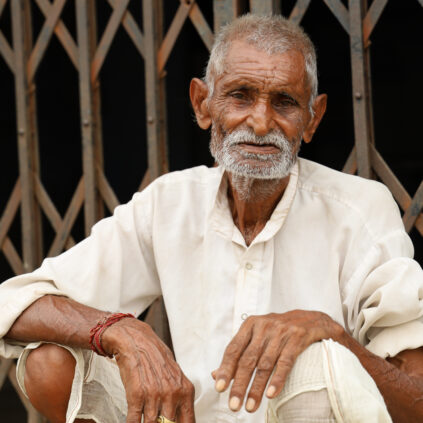
For anyone commissioning translations for India, understanding the cultural and linguistic context of Hindi is a vital part of the Go and No-Go decision.
India is home to 1.4 billion people, 28 states, 8 union territories, and a linguistic landscape so complex that no one can agree on how many languages it contains. The Indian census recorded over 19,500 raw self-reported mother tongue names in 2011. After years of linguistic rationalization of grouping variants, dialects, and duplicates, that number was consolidated into 121 languages considered distinct enough, and spoken by enough people, to officially count. The People’s Linguistic Survey of India applied different criteria for what separates a language from a dialect, putting the number closer to 780. The difference reflects both methodology and politics.
The gap between those figures tells us that language in India is a political issue. In terms of population size, Hindi is the most widely spoken language in the country, declared an official language – not to be confused with national language – of the Union alongside English in the Constitution of 1950. It is the primary language of the so-called Hindi Belt, a broad swathe of northern and central India covering Uttar Pradesh, Bihar, Madhya Pradesh, Rajasthan, Haryana, Himachal Pradesh and Uttarakhand, among others. This region alone contains more people than the entire North America.
Outside that belt, the picture changes dramatically. In Tamil Nadu, Karnataka, West Bengal, Maharashtra, and Kerala, Hindi is not the mother tongue of most people. It is at best a second language. This tension, between the proposal of Hindi becoming a unifying national language and Hindi being a northern language to be forced into the south, has defined Indian language politics for decades.
Where Hindi Comes From
Hindi descends from Sanskrit, the ancient classical language of Hindu scripture and scholarship, the Latin of the Indian subcontinent.
The Prakrits were the common spoken languages of ordinary people. Over centuries, they diverged from classical Sanskrit, giving way to Apabhramsha, the late medieval transitional forms that eventually produced the modern Indo-Aryan languages of northern India. Hindi crystallized from its ancestors around the 10th and 11th centuries CE.
The medieval period brought significant Persian and Arabic influence through the Delhi Sultanate and the Mughal Empire, which governed much of the subcontinent from the 16th to the 18th century. This is the period that produced Hindustani: a flexible spoken vernacular that served as a lingua franca all over northern India.
Hindustani’s more formal literary counterpart was Urdu, a name that comes from a Turkic word meaning “camp.” It was the language of the Mughal army that spread across the subcontinent on horseback, and it drew heavily on Persian and Arabic for its vocabulary and prestige. Urdu is found in India’s classical poetry and court literature.
By the 18th century, Urdu was becoming a distinct literary language in elite settings and was written in the Nastaliq Arabic script. It became an official language of northern British India in 1837.
Hindi’s formalization came later, and in deliberate opposition to it. From around 1880, reformers began actively purging Persian and Arabic vocabulary from the written standard, replacing it with words drawn from Sanskrit and writing it in the Devanagari script. It was a conscious political and cultural project that used language as a marker of religious and national identity.
By the time Britain partitioned the subcontinent into India and Pakistan in 1947, the two written standards had already been growing apart for many years. India doubled down on Sanskritised Hindi, and Pakistan adopted Urdu as its national language and accelerated its own movement toward Persian and Arabic vocabulary.
Hindustani: The Language On the Street
Hindi and Urdu are, grammatically and phonologically, almost the same language. A conversation between a Hindi speaker from Delhi and an Urdu speaker from Lahore is entirely intelligible.
The difference is largely one of script because Hindi is written in Devanagari, and Urdu in a modified Arabic script. There is also a minor difference in register. In everyday spoken form, the blend of the two is Hindustani.
Hindustani is a spoken language. It does not have a standardized written form. When it does appear in writing, it is usually written in Devanagari simply because it’s the dominant script in India. Because it was never codified, it was never formally contested.
Mahatma Gandhi actively promoted Hindustani as a unifying language because it wasn’t associated with either the Hindu or Muslim community.
Today, Hindustani continues to serve as a simplified lingua franca in all of northern India, in all of India’s major cities and even in non-Hindi-speaking areas, including the south, where people resist standard Hindi. In popular culture, it is the language spoken in Bollywood films.
The Hindi Imposition Debate
If you are managing a multilingual project for India and a client requests Hindi, ask this question first:
Which part of India are you translating for?
Hindi is not a shared national language. It is the dominant language of the north, but not of any other region. For many people, it is a symbol of northern cultural dominance, and the passionate debate over its status has never fully settled.
The Constitutional Settlement of 1950 designated Hindi and English as joint official languages of the Union, with a 15-year transition period after which Hindi was supposed to take over entirely. But that transition never happened. In 1965, when the transition period expired and the government moved to implement Hindi as the sole official language, Tamil Nadu erupted. Protesters took to the streets, people died, and the agitation made it clear that the South would not accept this linguistic imposition.
The idea of Hindi being India’s shared national language is widely held outside India but inaccurate. It remains vigorously contested within the country for various reasons, many of which are practical in nature. The Constitution does not designate national languages. It designates only official languages and explicitly protects states’ rights to conduct their business in their own regional languages. Tamil, Telugu, Bengali, Marathi, Gujarati, and 19 others hold official status at the state level.
In practical terms, a Hindi translation is not a translation that can serve all of India and depending on what variant of Hindi is being used, sometimes not even all areas within the Hindi-speaking regions. Depending on your target population, it may reach far fewer people than intended. A language plan for a pan-India project will need to go well beyond Hindi, and the decision about which variant and which additional languages to include is both geographical and political.
What You Get When You Ask for 'Hindi'
Let’s say your language plan includes Hindi after all. Now, you need to be more specific when requesting a Hindi translation.
The 600 million figure commonly cited for the number of Hindi speakers is also politically contested. When India’s census counts Hindi speakers, it includes everyone who listed Hindi as their mother tongue. But this actually refers to speakers of Hindi varieties, like Bhojpuri, Maithili, Awadhi, and Rajasthani, among dozens of others.
Many linguists consider these distinct languages in their own right rather than dialects of Hindi. Bhojpuri alone has somewhere between 50 and 60 million speakers and a thriving film and music industry of its own.
What a translator will produce when you commission a Hindi translation is Standard Hindi, the formal written variety based on the Khariboli dialect of the Delhi region. It is taught in schools, used in government, and understood across the Hindi Belt. But it is not the mother tongue of most of the people, even within that belt. Many of the people do not have formal education, hence they will not necessarily understand Standard Hindi the way they understand the variety they speak every day.
For regulatory documentation, professional and medical content, and legal documents, Standard Hindi is perfect. For consumer content, health-related materials, questionnaires or anything requiring genuine comprehension and engagement rather than formal acknowledgement, this gap needs careful consideration. A document written in formal Standard Hindi may be understood by its reader, but in the best-case scenario, without feeling like it was genuinely written for them. The accuracy of responses on surveys and testing materials will vary, and sometimes widely.
The practical guidance here is to ask for plain, accessible Hindi and specify in your brief that the target reader may have a moderate rather than a high level of formal education, and the vocabulary should favour commonly understood words over Sanskritized formal terms.
The other thing worth specifying is the translator profile. Ask for someone from the region where the materials will be used, not just any Hindi speaker. A translator from Delhi producing materials for participants in rural Uttar Pradesh or Bihar is not the same as a local subject-matter reviewer.
The Devanagari Script
Hindi is written in Devanagari, a left-to-right script also used for Sanskrit, Marathi, and Nepali, among others.
It looks like this:
हिन्दी देवनागरी में लिखी जाती है
Translation: Hindi is written in Devanagari.
Phonetic transliteration: Hindee Devanaagaree mein likhee jaatee hai.
Words in Devanagari are written with a horizontal line running across the top called the shirorekha, which joins the characters together. Rather than letters sitting on a baseline, Devanagari characters hang from this overhead line, as if suspended from a clothesline.
Devanagari descends from the Brahmi script, one of India’s oldest writing systems, first attested around the 3rd century BCE, most famously in the rock edicts of the Emperor Ashoka, who used it to inscribe Buddhist teachings across the subcontinent. Brahmi happens to be the ancestor of most writing systems across South and Southeast Asia, including the scripts used for Bengali, Tamil, Telugu, Thai, Tibetan, and Khmer. It gradually evolved into the Nagari script, which in turn gave rise to Devanagari, with the earliest known Devanagari inscriptions dating to around the 10th century CE.
There is also a lovely detail in its name: “Deva” means heavenly or divine in Sanskrit, giving Devanagari the meaning of something like “the script of the city of the gods.”
Devanagari works differently from an alphabet. It is an abugida, which means that each character represents a full syllable, not a single sound. Specifically, each character is a consonant with a vowel already built into it. The default built-in vowel is a short “a” sound. So the character क is “ka.” The character प is “pa.” The character म is “ma.” And so on.
If you want a different vowel, you attach a small diacritic mark to modify the base character. So क (ka) becomes कि (ki), कु (ku), or के (ke) depending on which mark you add. If you want only a bare consonant, you add a mark called a matra (a small curved mark placed under the consonant), which cancels the default vowel. For example, क् is simply “k,” with no vowel sound following it.
In this system, a single Devanagari character contains more information than a single English letter. Where English needs two or three characters to represent a syllable, Devanagari does it in one visual unit.
Devanagari is largely phonetic. Unlike English, where “though,” “through,” “tough,” and “cough” share a letter sequence but not a pronunciation, Devanagari largely reads the way it sounds. If you can read the script, you can pronounce the word. This makes Hindi considerably more accessible to new learners.
The script has no uppercase or lowercase letters, which means that design conventions relying on capitalization for emphasis or hierarchy, such as headings, acronyms, and proper nouns, are handled differently in Hindi writing. Devanagari also tends to produce text that runs slightly longer than its English source, enough to impact layouts with fixed text boxes or constrained fields.
Grammar: A Different Kind of Logic
Hindi grammar presents several structural differences from English that are worth understanding if you are writing content that evaluates language acquisition, development or tests language skills. They also have direct consequences for how translation works and what you need to specify in a translation brief.
Word Order
English is a Subject-Verb-Object language: “The doctor examined the patient.” Hindi follows the Subject-Object-Verb pattern. The same sentence in Hindi would follow the logic of “The doctor the patient examined.” This reflects a completely different way of building sentences, and it means that translated text will rarely mirror the word order of its source. This matters in assessments that include word order tasks, like intelligence tests. In Hindi, the task must be completely transadapted, along with the scoring algorithm.
Grammatical Gender
Most European languages with grammatical gender assign it to nouns. For example, a table is feminine in French, masculine in Spanish. Hindi does the same, but the gender agreement extends through the entire sentence because verbs change depending on the gender of the subject. Adjectives change to match the nouns they describe. This means that an English sentence can require a different Hindi version depending on whether the speaker or subject is male or female. For any materials where the speaker’s identity matters, like patient diaries, first-person instructions, or consent forms, this is a structural requirement that needs to be specified in the brief before translation begins.
Pronoun Register
English once had a formal and informal you: thou and you. Over centuries, it disappeared. Hindi uses three levels: aap, which is formal and respectful; tum, which is informal and used with peers or people you know well; and tu, which is intimate and, if used inappropriately, can come across as dismissive or even rude. Choosing the wrong register is a major error.
Machine Translation and AI: Proceed with Caution
Recently, I sat at a dinner with an AI specialist who works for a technology company which provides services to the Life Sciences industry, though unrelated to translation. We talked about what I do for a living, and unsurprisingly, his view of the outlook for translation service providers was something along the lines of AI being adequately capable of handling all translation work now.
On one hand, I agree. If you’re translating a website, code, software modules and fields, internal memos, emails, basic letters and any content that can tolerate a higher degree of error, then AI surely serves this area well. But we translate high-stakes content where potentially serious errors can hide under correct wording and result in loss of life, serious injury, misdiagnosis, and so on. This is a totally different ballgame. What we look at is the category of MT and NLP training that the language belongs to: low-, mid- or high-resource.
There is a saying in the translation industry:
A translation is only as good as its translator.
High-resource languages like English, French, Spanish, Mandarin or German have enormous amounts of digital text available in MTs and NLPs. Engines trained on these languages perform well because they have been fed billions of words of text to learn from. And they still miss important nuances.
Hindi is a ‘mid-resource language’. There is substantial training data available, and the major MT engines in computer-assisted translation tools handle Standard Hindi far better than they handle most regional Indian languages. But it is not high-resource either.
MT performs reasonably well on formal Standard Hindi. Administrative language, regulatory content, and technical documentation in the Khariboli written standard tend to translate with acceptable accuracy in both directions. However, anything in register variation along the Hindi-Urdu continuum, and anything requiring sensitivity to context, should be translated by a human translator, without machine pre-translation.
The Hindi-Urdu problem is particularly relevant. Most MT engines trained on Hindi data are trained predominantly on Standard Hindi, which skews toward Sanskritised vocabulary. When input text leans closer to the Hindustani end of the spectrum, more Persian and Arabic vocabulary and more colloquial constructions, MT and NLP engines can misread it, produce awkward and hallucinatory output, or generate a more formal register than it should be. The translation may be technically correct but tonally wrong, which can easily result in significant variability in understanding.
Gender agreement errors are the most common culprits in Hindi MT output and among the hardest to catch in a cursory review. A verb that agrees with the wrong gender can change the meaning of a sentence without triggering any obvious red flags. These errors require careful human post-editing by a reviewer who knows what to look for, and if the text is long, it can skyrocket the cost of the translation well beyond what it would have cost if it were done by a human translator to begin with.
For purely AI translation tools, the picture is similar but with an added consideration. The training data for Hindi AI models reflects the digital internet, which skews heavily toward urban, educated, Standard Hindi. The language patterns of older populations, rural communities, and speakers with lower levels of formal education are significantly underrepresented. If your target population is outside the urban middle class, AI translation output warrants particularly careful human review, and the reviewer’s profile is just as important as the language pair.
One final point: Hindi and Urdu are close enough that MT engines occasionally conflate them, borrowing vocabulary from the wrong side of the continuum depending on how the training data was assembled. A Hindi translation that has drifted toward Urdu vocabulary may be perfectly intelligible to a Hindi speaker but carry unintended cultural associations, especially in contexts where the Hindu-Muslim distinction is socially significant to the target population. It is a subtle error, and one that a human reviewer is far better placed to catch than an automated quality check.
Hindi in Western Cultures
Vocabulary
Hindi has exported its words into English and other languages. Exported words arrived in other cultures through trade, colonization, and cultural exchange over many centuries, and include jungle, shampoo, bungalow, pyjamas, thug, loot, and avatar. All of these come from Hindi or Sanskrit.
Karma, now used casually in English conversation, came to mean something like “what goes around comes around.” In Hindu and Buddhist philosophy, it has a considerably deeper meaning. It represents the principle that actions have consequences that extend across lifetimes.
The word yoga, now part of daily life for millions of people in the West, is Sanskrit for union or discipline. And namaste is a Sanskrit greeting that combines two words: “namas” meaning bow or reverence, and “te” meaning to you. So, literally, it means “I bow to you” or “I bow to the divine in you.” The accompanying gesture of namaste is called Anjali Mudra in Sanskrit and consists of holding the palms together in front of the chest and slightly inclining the head, acknowledging the sacred in the person you are greeting. In India, this gesture is used as both a greeting and a farewell. In the West, it has been adopted primarily through yoga culture, where it is used at the end of a class, and it conveys a sense of mutual respect between teacher and student.
The Panchatantra
The Panchatantra is less well known in the West but arguably familiar. It is a collection of animal fables composed in Sanskrit, probably around the 3rd century BCE, in which animals talk, scheme, outwit each other, and act out very human dramas about power, loyalty, betrayal, and survival. It is one of the most widely translated texts in human history.
Its stories travelled west through Persian and Arabic translations during the medieval period and eventually reached European readers. Many of the animal fables Western children grow up with, like the monkey and the crocodile, the lion and the rabbit, belong to a storytelling tradition that shares deep roots with the Panchatantra.
Bollywood
The Hindi-language film industry based in Mumbai is one of the largest in the world by the annual number of films it produces. Its influence on Hindi as a living language is considerable. Bollywood has popularized a particular Hindustani-inflected version of Hindi that crosses regional, generational, and class lines in ways that formal Standard Hindi cannot even begin to compete with. For many people outside the Hindi Belt, Bollywood Hindi is their primary exposure to the language, and it has done more to spread a common spoken Hindi across India than any government language policy has managed.
Working with Hindi
If your project involves audiences in multiple Indian states, check whether Hindi is actually the dominant language in each location before even considering it. In a country with 780 languages and a history of passionately resisting the imposition of a language not spoken in the region, defaulting to Hindi as the national lingua franca could be received as tone-deaf at best and undermine the trust you need to build with your audience.
Hindi is a language of extraordinary depth and reach, with a literature, a history, and a cultural life lived largely through its many variants and dialects. Working with it well is simply a matter of knowing what you are working with, and Hindi speakers deserve more than working with a generic default.
If you’ve missed previous editions of the Santium Language Series, you’ll find them here – catch up!
How Santium contributes to this space
Santium provides specialized language services focused on scientific, medical and technical content. We focus on delivering translated materials that work as intended across languages and cultures through translation, linguistic validation and subject-matter specialist review, preserving meaning, function, usability, and measurement integrity in real-world applications.
Follow Santium to stay connected
If you found this article interesting, follow me on LinkedIn and join our newsletter to receive future editions. In the Santium Language Series, I explore interesting traits of the world’s languages, from the most widely spoken to obscure, introducing their structure and word formation to cultural nuance and their role in social norms.
Stay connected and don’t miss the next edition!

|
Thank you for signing up. |



Monika Vance
Managing Director | SANTIUM
My work sits at the intersection of linguistics, scientific and medical translation, psychometric measurement, and multilingual operations, where terminology, usability, and regulatory context must align. I write about scientific and medical translations, psychometrics, languages, and the operational challenges that inevitably come with them. I also teach translators how to properly translate and validate complex psychometric instruments to hone their expertise in linguistic validation.