










American vs. British English: Same Language in Different Voices
In the context of clinical outcome assessments, why is adaptation between British English and American English harder than we expect it to be?

Beyond English: Why Instructional Language Matters in Rater Training
Most clinicians learned medicine in their national instructional language and can speak or read English, but conversational fluency is not the same as instructional fluency for complex diagnostic constructs.

Filipino: The Multilingual Language
The Philippines is home to more than 180 languages, yet one was chosen to connect its thousands of islands. Discover how Filipino evolved from Tagalog and absorbed centuries of Austronesian, Spanish and English influence to become the national language of one of the world’s most populated and linguistically diverse countries.

Icelandic: An Ancient Language From the Land of Ice and Fire
Modern Icelanders can still read 800-year-old Viking sagas with relatively little difficulty. Shaped by a strong tradition of literature and storytelling on a geographically isolated island, Icelandic has changed so little that it still resembles Old Norse. Yet life in Iceland is vibrantly modern and set against a jaw-dropping landscape.

The Rohonc Codex: Europe’s Mysterious 16th-Century Manuscript
A small, illustrated manuscript containing nearly 450 pages has sat silent for nearly two centuries, because no one can read it. We do not know who wrote it. We do not know what language it represents. We do not even know if it contains a language at all.

The Hebrew Language: A History of Language, People and the Holy Land
Most languages evolve through contact with another within one general region. Hebrew had a different path. Its speakers were conquered, dispersed across continents and absorbed into societies speaking dozens of other languages. The story of its revival and its speakers’ return to the Holy Land is a complex saga deeply rooted in differences in religion, culture, language and social status.

Portuguese: The Language of a Maritime Trading Empire
Portugal has always been a small country. Yet for several centuries, it commanded one of the world’s most powerful empires. The kingdom built an enormous global trading network, supported by a formidable seafaring fleet that transported goods and people, and established the Portuguese language across several continents.

Rongorongo: The Lost Script of Rapa Nui
On Rapa Nui, a handful of wooden tablets preserve rows of carved signs. We know they were meaningful. We know they followed rules. We may even have evidence that the system predates European contact. But its readers have disappeared.

The Inuit: Languages and People of Arctic Canada
In Inuit Nunangat, the broad swathe of land and ice across Arctic Canada, language and community life have been shaped by one of the most demanding environments on Earth. Inuit languages of Canada, alongside remote traditions and unique knowledge, made life in the Arctic possible. Yet, despite the damage caused by past government policies, Inuit communities continue to preserve their language and culture and to adapt their traditions in parallel to modern life as it evolves thousands of miles away along the densely populated southern border of the country.
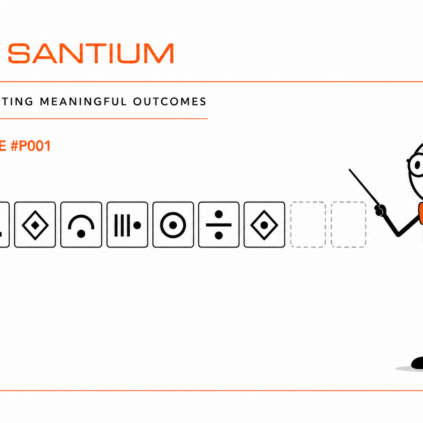
Weekend Linguistic Challenge: Designing a Symbol Translation Task
What happens when a child is asked to learn a language through meaningless symbols, remember their assigned meaning, and then combine them to “read” a sentence? Except there is a problem: the sentence structure belongs to a different language.

How Proverbs Connect Language, Culture and Cognition
Proverbs sit at the intersection of language, culture and cognition. They preserve collective memory, vary in the level of abstract reasoning, and reflect the cultural contexts that formed them, offering enduring wisdom as well as insight into past ways of life, values and survival.
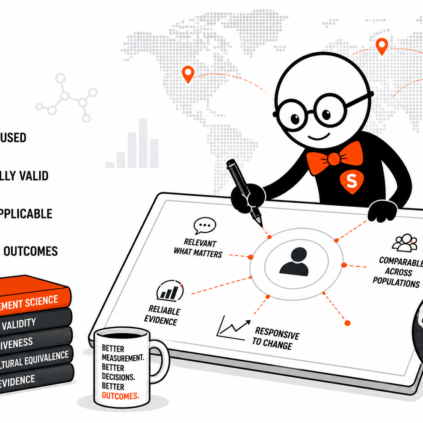
Designing Clinical Outcome Assessments for the Next Generation of Global Clinical Trials
Designing clinical outcome assessments is a well-established science. The major regulatory agencies largely converge on that science, although they differ in how explicitly they describe it and how formal their qualification pathways are. The future of clinical outcome assessments is about building better measurement systems.

Adaptive Behavior Is Universal. The Behaviors Used to Measure It Are Not.
Adaptive behavior instruments measure how individuals function in daily life. The domains are universal, but the behaviors used to assess them vary across cultures.

A Brief History of Clinical Outcome Assessments
Clinical outcomes assessments are routinely used across clinical settings. Learn about their developmental history in clinical practice and what to consider before using them in new settings.

How Linguistic Validation Interacts with Measurement Science and AI Translation Models
Linguistic validation is the localization process behind translating clinical outcome assessments. It is a discipline of its own. Clinical outcome measures are not texts. They are sensitive scientific instruments. Every word and phrase are high stakes content.


SUBSCRIBE TODAY!
Follow us through occasional updates and articles written with our customers and vendors in mind.



Instrumenting meaningful outcomes.
