
I grew up in a home with passionate ice hockey and (European) football fans. Aside from the tension and excitement in the momentum of the match, there was always also outrage whenever a Czech or Slovak player’s name got butchered by English-speaking commentators in a live broadcast.
“Who taught you how to read???!!!”, dad would rant at the TV, arms up, pointed toward the screen, gripping the remote, “It’s SHTYAHST-nee, not STASS-ny…(profanity)!”, head shaking in profound disdain.
It’s Boo-blah, not BAB-lah. Hur-dyina, not Har-DEENA. Endless free-for-all phonetics expertise, live from the centre of the living room sofa.
Don Cherry didn’t help much either. A flamboyantly dressed former NHL coach revered by Canadian hockey fans, Cherry was famous for struggling with foreign names and not bothering to learn them. His Coach’s Corner commentary segments, aired during game breaks, were punchy, entertaining, and loaded with tips for kids developing their playing skills.
Only in recent years have professional sports teams begun to use pronunciation guidelines for their players’ names. Commentators are now pronouncing them much better, which would surely spare a fraction of dad’s blood pressure. Yet, many names are still mispronounced by the fanship because players who’ve been part of foreign teams for a long time are more or less used to it, and seemingly don’t care enough to make noise about it. Some of them have even begun to pronounce their names the way their foreign fans do!
Nonetheless, the native pronunciations of some of your heroes’ names in their native languages may surprise you!
Ice Hockey Players
In this sport, the most commonly mispronounced names are Finnish.
Finnish
Teemu Selänne —TEH-moo SEH-lan-neh (Retired)
Teemu Selänne is the highest-scoring Finnish player in NHL history, with 684 goals and 1,457 points across 21 seasons. He is in the Hockey Hall of Fame, the IIHF Hall of Fame, and a biographical documentary about him became one of the top-grossing films in Finnish cinema history. In Finland, he is a national hero.
North American broadcasters called him “Tee-moo seh-LAN-ee”. Teammates and fans called him the Finnish Flash, for his speed.
The umlaut ä in Finnish is pronounced like the “a” in “hat” or “cat,” bright and front-of-mouth. The nn double consonant is held slightly longer before releasing. And without exception, Finnish stress always falls on the first syllable.
Ukko-Pekka Luukkonen – OOHK-ko PEK-ka LOOHK-kon-nen (Team: Buffalo Sabres)
The most comprehensively Finnish name in the NHL right now. Ukko is the god of thunder in Finnish mythology; the supreme deity of the old Finnish pantheon. The double letters throughout (uu, kk, nn) all follow Finnish rules: sustained vowels, held consonants. His teammates just call him UPL.
Teuvo Teräväinen — TAY-vo TEHR-ah-VAY-nen (Team: Chicago Blackhawks)
Stanley Cup winner in 2015, and the owner of one of the most reliably mispronounced names in the league. In 2012, on the day he was drafted 18th overall by the Blackhawks, his name was mispronounced on national television as it was announced. Teammates call him Turbo. Short, fast, Finnish. Suits him perfectly.
Juuse Saros – YUO-seh SAH-ros (Team: Nasville Predators)
Juuse Saros is the top Finnish goaltender in the NHL, and he represented Finland at the 2026 Winter Olympics. He has been one of the most reliable starters in the league for the better part of a decade. His name is commonly mispronounced as “Juice Sayros.” His teammates call him Juice.
Jesse Puljujärvi — YES-seh POOL-yoo-YEHR-vee (Team: Genève-Servette)
Drafted fourth overall in 2016 by the Edmonton Oilers, and one of the most scrutinized picks in recent draft history. He played multiple seasons in Edmonton, Canada, returned to Finland, came back to the NHL, and is now playing for Genève-Servette in the Swiss National League.
In most European languages, j is a y sound.
His nickname is The Bison King, after he posted a photo on Instagram standing next to a bison on an off day. It went viral, and the nickname stuck so firmly that he filed a trademark for it.
Swedish
Mats Sundin – MATS SOON-DEEN (Team: Toronto Maple Leafs)
Mats Sundin captained the Maple Leafs for over a decade, holds the franchise record for points, and was the first European-born captain in the team’s history. He was inducted into the Hockey Hall of Fame in 2012, and now he is back as a senior executive adviser of hockey operations as the Leafs begin yet another exasperating rebuilding chapter.
Torontonians generally call him Mats, but pronounce his last name as “SUN-din. The Swedish u in Sundin is rounder and darker, closer to the sound in the French word “sur.” The stress is distributed across both syllables almost equally, with slightly more weight on the first.
His nickname is The Sun, a direct adaptation of his last name but also synonymous with his broad smile. Swedish fans called him Sunken, a Swedish diminutive affectionate form.
Peter Forsberg – PEH-tehr FOH-shberg (Retired)
Peter Forsberg is widely considered one of the greatest players in the history of the sport. Two Stanley Cups, Olympic gold, points records that still stand.
Broadcasters called him “FORSS-berg” for his entire career. In Swedish, the “rs” combination carries the “rsh” sound. The same goes for names like Lars, which is pronounced as “Lahrsh”, or Larsson, which sounds like “LAHRSH-son”.
Swedish fans nicknamed him Foppa: a diminutive with a playful compression of his last name.
Simon Holmström – SEE-mon HOLM-shtruhm (Team: New York Islanders)
Simon Holmström was selected to represent Sweden at the 2026 World Championships and is becoming one of the more complete two-way forwards in the league.
The umlaut ö is darker and rounder than English o. The lips are rounded to say o, but the speaker vocalizes “uh”.
Broadcasters still call him “SY-mon HOLM-strum”. Swedish fans nicknamed him Holmer, a Swedish diminutive of his last name, and his teammates also use this name.
Canadian (French)
Patrick Roy — Pah-TREEK RWAH (Retired)
One of the most notorious mispronunciations in NHL hockey history. Roy is a Canadian French surname, pronounced like the French word for “king”, roi, with a Canadian Frenchy, breathy, more or less silent “puh” start to it. In rural Quebec, it sounds almost like “pwah” with a very light p.
American broadcasters called him “Roy”, as in “boy”, for his entire Hall of Fame career. Roy reportedly often corrected people, with no success.
Russian
Aleksandr Ovechkin – ah-yiek-SANDR oh-VIETCH-kin (Team: Washington Capitals)
Aleksandr Ovechkin is the greatest goal scorer in NHL history, the all-time record holder, and at 40 years old, he still played every game of the 2025-26 season.
n Russian, the stress lands on the last syllable, not the middle one. English speakers say “al-EX-an-der,” but Russians say “ah-yiek-SANDR”. It sounds short, back-loaded, with a clipped ending. The l in “al” is silent, and there is no floating “er” at the end. Russians also bend the e into a “ie” or “yie” sound. John Malkovich mastered this pretty well to sound Russian!
Teammates call him Ovie.
Czech and Slovak
Tomáš Hertl – to-MAASH HEHR-tl (Team: Vegas Golden Knights)
Derived from German Härtl. In Czech, the e is short and open, but the tl at the end is a clipped consonant cluster. English-speaking fans say “HER-tul” or “HER-tel,” which inserts a phantom vowel. The l carries the syllable and is clearly pronounced.
In 2013, in his ninth NHL game at the age of 19, he scored four goals against the New York Rangers, including a between-the-legs goal that went viral around the globe. His name was mispronounced in every language that covered it.
David Pastrňák – DAH-vid PAHSTUHR-NYAAK (Team: Boston Bruins)
Boston Bruins right winger David Pastrňák is one of the most recognizable names in hockey right now. His father was a pro player and coach, and died of cancer when David was young. He was David’s inspiration to become a pro player so he could carry his father’s name in the game. In 2025, he scored his 400th NHL goal against Toronto and is closing in on his fourth consecutive 100-point season.
Broadcasters are still mangling his name as PASS-ter-nak, seemingly because of the unfamiliar combination of the consonant cluster, soft ň sound and long a in his last name. Czech ň is the same sound as Spanish ñ, a soft “nyeh”.
Teammates call him Pasta.
Juraj Slafkovský – YOO-ray SLAHF-kof-skee (Team: Montreal Canadiens)
The first overall pick in the 2022 NHL Draft. At 17, he became the youngest player ever to score at the Winter Olympics. Now playing in one of the most scrutinized hockey markets in the world, and broadcasters still can’t get his name right. The emphasis in both names is at the front.
Juraj is a Slovak form of George.
Martin Fehérváry – MAR-tyin FEH-air-vaah-ree (Team: Washington Capitals)
Martin Fehérváry was born and raised in Bratislava and plays for the Slovak national team. But his last name is Hungarian. It derives from fehér, meaning white, and vár, meaning castle. The name is connected to Székesfehérvár, one of Hungary’s oldest and most historically significant cities, the place where Hungarian kings were traditionally crowned. Slovakia used to be a part of the Kingdom of Hungary.
When Fehérváry arrived at his first Washington Capitals development camp, a journalist asked him how to say his name. A teammate immediately spoke up and said, “We just call him Martin.”
Football (Soccer) Players
Catalan
Carles Puyol – KAR-luhs pu-YOL (Retired)
Captain Carles Puyol played for Barcelona his entire career. He is widely considered one of the greatest defenders and greatest captains the sport has ever seen. Ferocious player, a relentless leader and a cohesive disciplinarian.
English broadcasters pronounced his name as “KAR-leys PU-yol”. Small difference, but the phonetic misplacement in syllabic emphasis would make it quite distinctive to Catalan speakers, including Carles. Catalonia has its own language, which is older than modern Spanish and very distinct from it. Carles is the Catalan form of Charles.
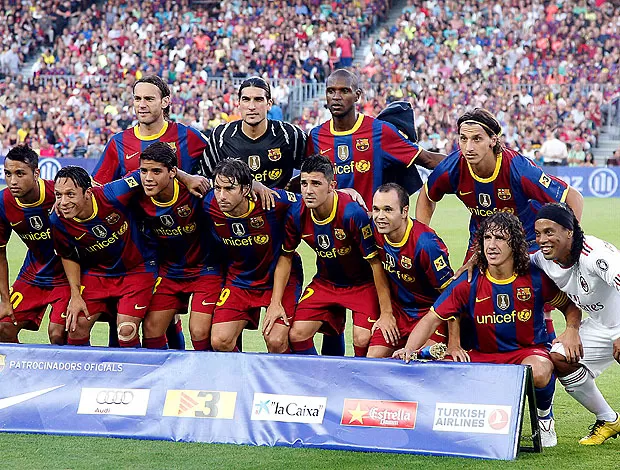
In 2008, AC Milan played against Barcelona for the Trofeo Joan Gamper, a friendly pre-season match. It was Ronaldinho’s first return to Barcelona since being traded to Milan, and the crowd gave him a standing ovation. Before kick-off, as both teams lined up for the traditional team photo, Puyol walked over to the AC Milan side and invited Ronaldinho to join the Barcelona squad for the photo. Ronaldinho squatted next to Carles and his former teammates, and the image became one of the most iconic images in football history.
His nickname is El Tiburón (The Shark).
Portuguese
The most frequently mispronounced names in this sport appear to be Portuguese, mainly because pronunciation rules differ between European Portuguese and Brazilian Portuguese. Despite the same spelling, European Portuguese sounds more clipped, consonant-heavy and thick. Brazilian Portuguese sounds open, vowel-rich, and melodic.
Bruno Fernandes – BROO-no fur-NANDSH (Team: Manchester United)
Captain Bruno Fernandes is one of the most recognizable players in the Premier League. From Portugal, a consistent top scorer, with dramatic flair for celebrating goals and a tendency to argue with referees, fans credit him with single-handedly keeping the club competitive through several turbulent seasons.
English broadcasters are firmly settled on “for-NAN-dez”.
In Portuguese, the -es ending is not the Spanish-like “z” sound. It is a nasal, hushing sound like a soft “sh”.
His nickname is Captain Marmite.
Ronaldo de Assis Moreira – ho-NAU-do jee ah-SEES mo-HAY-ra (Retired)
This one is unique because this Ronaldo is far better known by his nickname, Ronaldinho Gaúcho. This one should be pronounced as “ho-NAU-jeen-yoo ga-OO-shoo”. The proper pronunciation in Brazilian Portuguese. Brazilian fans gave him the nickname to distinguish him from the other Brazilian Ronaldo, the striker Ronaldo Luís Nazário de Lima, who was already dominating world football at the time.
European broadcasters and fans pronounce his nickname as “ro-nal-DEEN-yo GOW-choh.”
In Brazilian Portuguese, the initial r and double rr are a soft h sound. In European Portuguese, it is a guttural back-of-the-throat sound, closer to the French r. Ronaldinho’s name follows the Brazilian sound system.
The nickname is a representation of his name in diminutive form, combined with the cultural identity associated with Rio Grande do Sol, the region he comes from. A gaúcho is a South American cowboy, the free-spirited horseman of the Pampas grassland of his home.
His nickname means: Little Ronaldo the Cowboy.
Francisco Conceição — fran-SEESH-ku kon-say-SOWN (Team: Juventus FC)
Francisco Conceição comes from one of football’s most recognizable families. His father is Sérgio Conceição, a former footballer and currently the club manager at Al-Ittihad. His brothers Rodrigo and Moisés are also professional footballers. Francisco is known as Chico, the common Portuguese nickname for Francisco, and the equivalent of Frank for Francis in English.
His name is commonly mispronounced as “fran-SIS-ko con-SAY-sow”.
The cedilla ç is a plain s sound. The ão ending is a diphthong where the two vowels glide together, forming an “ow” sound.
African
I’ll group these names by continent since they are often shared across multiple languages.
Kylian Mbappé – kee-LIEYAN hm-bah-PAY (Team: Real Madrid)
Kylian Mbappé is one of the most recognizable footballers on the planet right now. Aside from skill, a World Cup winner at 19, a Champions League winner with Real Madrid, and the fastest player of his generation. Born in France, his last name is of Cameroonian origin and follows the language’s phonology.
Broadcasters pronounce it as “KIL-ee-an em-BA-pay”.
The M in his last name is not an “em”. It’s a tight nasal hum that sounds more like a “hmm” and easily glides into “bah”, with emphasis on the “PAY”. When you say it like that, you’ll notice a different, more African, rhythm to it. Perfect for a chant in the stands!
Kylian doesn’t bother correcting people, because “I’d have a lot of work to do…” His family and friends call him “Kyky”.
Ousmane Dembélé – ooz-MAN dem-BAY-lay (Team: Paris Saint-Germain)
Ousmane Dembélé was just named Best Men’s Player at the Globe Soccer Awards — the world’s newly crowned best footballer, playing alongside Mbappé. Born in France, his name is a hybrid of three languages, Arabic, West African and French.
English broadcasters pronounce his name as “OOZ-man DEM-bay-lay” while their French counterparts correctly say “ooz-MAN” but then also mangle “dem-BEH-leh” in their native accents.
His teammates across the league call him Dembouz; a French-style compression of his name.
Norwegian
Erling Haaland – AIR-ling HOH-lan (Team: Manchester City)
Erling Haaland is the most prolific goalscorer of his generation. Born in Leeds and of Norwegian descent. His father Alfie, who played for Leeds United. His last name is often mispronounced as “HAY-land”.
In Norwegian, aa represents the letter å, which is a rounded back vowel, darker and longer than the English a; closer to the o in “hall”, and the final consonants are often silent. It sounds like “Holland” with a silent d at the end.
His nickname is Terminator.
Albanian
Granit Xhaka – GRAH-nit JAH-ka (Team: Sunderland)
Granit Xhaka is Swiss, of Albanian descent, and currently captaining Sunderland in the Premier League and the Swiss national team.
Broadcasters mispronounce his name as “SHAH-ka” and “CHA-ka”.
In Albanian, Xh represents the j sound associated with English as in “jar.”
His name means granite in Albanian. He answers to Granit.
Turkish
Uğurcan Çakır – OO-oor-jan CHA-kuhr (Team: Galatasaray)
Goalkeeper Uğurcan Çakır is Turkey’s number one, a Süper Lig champion with both Trabzonspor and now Galatasaray. He won the title again this season and is one of the most recognizable figures in Turkish football.
Broadcasters mispronounce his name as “oo-GOOR-kan CHA-keer.”
The Turkish ğ is a silent g. Its job is to lengthen the sound of the vowel that comes before it. Then, the ending “can” is actually a Turkish word for soul or life, and is pronounced as “jan”, because a Turkish c carries the equivalent of an English j sound.
The Turkish letter ç sounds like “ch” in the English word “church”, and the dotless ı is an unrounded back vowel that sounds something like “uh” at the back of the throat.
How Santium Contributes to This Space
Santium provides specialized translation and cross-cultural research services focused on adapting and validating scientific, medical and technical content. We deliver translated materials that work as intended across languages and cultures through translation, linguistic validation, and subject-matter specialist engagement, preserving meaning, functionality, usability, and, where applicable, measurement integrity in real-world applications and settings.
With the ice hockey season currently ending in the playoffs and the 2026 FIFA World Cup kick-off coming up next month, fans are and will continue to be glued to television screens worldwide, rooting for their teams well into the summer.
That’s a lot of blood pressure to monitor!
Try your best to say your heroes’ names the way they are meant to be said, because like sports and music, language is also emotional and brings people together.
These days, we need that!
Good luck to your teams in the ice hockey playoffs and in the World Cup!
Curious About the World’s Languages?
If you found this article interesting, follow me on LinkedIn and join our newsletter to receive future editions. In the Santium Language Series, I explore interesting traits of the world’s languages, from the most widely spoken to obscure, introducing their structure and word formation to cultural nuance and their role in social norms.
Stay connected and don’t miss the next edition!
About the Author
Monika Vance | Managing Director | SANTIUM
My work sits at the intersection of linguistics, scientific and medical translation, psychometric measurement, and multilingual operations, where terminology, usability, end-user experience, and regulatory context must align. I write about scientific and medical translations, psychometrics, languages, patient-centred research and the operational challenges that inevitably come with them. I also teach translators how to properly translate and validate complex psychometric instruments to hone their expertise in linguistic validation.

|
Thank you for signing up. |



Monika Vance
Managing Director | SANTIUM
My work sits at the intersection of linguistics, scientific and medical translation, psychometric measurement, and multilingual operations, where terminology, usability, and regulatory context must align. I write about scientific and medical translations, psychometrics, languages, patient-centred research and the operational challenges that inevitably come with them. I also teach translators how to properly translate and validate complex psychometric instruments to hone their expertise in linguistic validation.