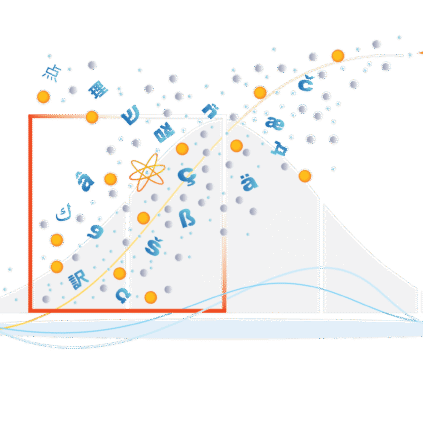
When you translate a clinical outcome assessment into another language, you are not just translating words and adjusting phrasing to mirror the original. That is only the visible layer. A clinical outcome measure is a statistically engineered instrument. It is built to detect change in human functioning, whether that change is obvious, subtle, subjective, behavioral, or cognitive. It is sensitive by design.
A COA is constructed to capture a specific clinical concept in a controlled and systematic way. Each item is written deliberately to draw out a defined aspect of that construct. If the wording is casual, it is intentionally aimed at the patient voice, and calibrated. If the wording is formal, it’s likely aimed at the examiner. Even small phrasing choices are tied to how respondents interpret the question and how their answers will later be analyzed.
Response options form a structured scale. They guide respondents through a graded cognitive exercise, asking them to position their experience along a defined continuum. The recall period is equally intentional. Whether the instrument asks about “today,” “the past week,” or “the past month,” that timeframe has been selected to balance memory effects with meaningful clinical change. It is part of the measurement design.
The structure of each item has also been tested. Clause order, specificity, and even certain amount of awkwardness is often deliberate. These elements contribute to reliability and validity within a defined population and context.
So when the instrument moves into another language, the first priority is to preserve the psychometric integrity of the instrument, as faithfully as possible. The goal is to maintain how it functions as a measurement system. Linguistic elegance comes second. The translated version must first and foremost behave like the original instrument in terms of what it measures and how it measures it.
COA Language is Built on Sensitive Measurement Models
Clinical outcome assessments come in different forms. Some are completed by patients. Others are completed by clinicians, teachers, family members and/or guardians. The format changes, but the underlying principle remains constant.
These instruments are built within formal measurement frameworks such as Classical Test Theory, Item Response Theory, or Rasch modeling. Each item plays a role within a larger statistical structure. Response scales are positioned intentionally. Items that appear repetitive are often included deliberately to strengthen reliability. Even negatively worded questions are placed strategically to serve an important technical function.
Most of these instruments are developed and validated in a single language. Their statistical behavior is established and optimized only in that linguistic context. When the instrument is introduced into another language, a common inference is that the same measurement structure continues to function, as long as the items and instructions are translated in a manner that semantically matches the source version. And that’s not necessarily true. Languages handle intensity, time, emphasis, and subtle distinctions differently. Words that seem equivalent on the surface sometimes have no business occupying the same place within a Likert scale.
Preserving the original measurement logic across languages is about maintaining how the instrument behaves as a measurement system. A perfectly matched translation, particularly one that is stylistically edited, can instantly eliminate this very function.
Words Can Match While Meaning Shifts
A translation can be technically accurate and still fail in the context of functioning as a measurement tool. This is where the difference between semantic equivalence and conceptual equivalence becomes important, though both of these concepts are still just the tip of the iceberg. Words may match the source text, but the underlying measurement concept doesn’t necessarily function in the same way in the new context.
Let’s set some clear parameters about what these types of equivalences actually mean.
Semantic equivalence is the most surface-level form of equivalence. It answers questions such as, “do the words in the translated version mean the same thing as the words in the source version?” Semantic equivalence does not guarantee that the same construct is being measured in its new context. It is primarily about lexical meaning in terms of vocabulary, terminology, and grammar, in the literal sense. It represents the simplest form of translation.
Conceptual equivalence means that the same idea, or construct, is being measured in both languages. This is the type of cross-language equivalence that the outcomes research community within Life Sciences industry has been publishing basic guidelines about for some time now. Conceptual equivalence still does not guarantee that the instrument will function in its new language and context equally as the source version, but the risk is much lower than with semantic equivalence because many clinical constructs are transferable to other cultures. When translated with priority on measurement rather than linguistic perfection, and this is key, a conceptually equivalent translation should end up mirroring the original measurement construct, along with capturing nuanced measurement-based phrasing.
Communication of experiences such as pain, fatigue, anxiety, or cognitive difficulty are shaped by culture. The way people describe them varies. The way they report them to a physician also varies. If adaptation focuses only on wording, the instrument is likely to drift away from what it was originally designed to capture. But someone, other than the linguist alone, has to pay attention to phrasing, especially during independent third-party linguistic reviews and edits, when the reviewing translator doesn’t have the psychometric context and understanding of the underlying construct and the exchanges that went on during the project. Over the years, we’ve had long tables of “errors” and “corrections” sent to us from translator reviewers with proposed edits. Sure, they were more eloquently phrased, using seemingly better nouns and verbs, but used in a way that unknowingly compromised the psychometric intent of the item.
Translatability assessment goes a long way to help with accurate phrasing. The operational reality is, however, that within the context of short timelines and usually cryptic project briefs, most translators refer to them during translation only when they get truly stuck and answers to their questions are not coming fast enough. The majority of these documents also focus only the semantic definitions of phrasing of the items because they’re not prepared by people who understand the psychometrics hiding under the hood of each item. Hence, measurement purpose is not part of the equation, and its context remains a mystery to the translator.
Let’s look at some common examples of areas at high risk of measurement error after translation.
Response scales. Small details can create large effects. Response scale anchors such as “not at all,” “slightly,” or “extremely” define a measurement range. Different languages distribute intensity differently. Some compress the middle of the scale, while others emphasize extremes. A word that seems accurate may still shift how respondents choose between categories because colloquial use of language and varying communication styles affect how this scale is interpreted. The text looks fine, but the data sometimes behaves differently.
Test-Retest Timelines. Timeframes are equally sensitive. Phrases like “today” or “over the past week” are part of the instrument’s design. They are chosen to support reliability and interpretability. But languages express time in different ways. If recall wording shifts slightly, respondents may think about a different time span than intended. What looks like a minor phrasing change can affect comparability of results.
Item structure. The order of clauses, the use of negatives, and the specificity of behaviors all influence how a question is understood. Instruments often include several items that seem similar but actually capture slightly different aspects of a construct. Changing structure to improve readability can unintentionally change how respondents interpret the item.
These are just a few examples of many within the COA translation space. Translators are mainly trained to preserve meaning, improve clarity and natural flow; a mirror-like perfection in semantic equivalence. Measurement tools, however, are designed to control interpretation. Conceptual equivalence is just the tip of the iceberg within the scope of linguistic validation. The construct itself is not always applicable in other languages or settings.
Just to be clear: it is not practical to validate a new construct within a new population and context for the purposes of a clinical trial. But the scope of linguistic validation provides ample space for capturing risks, and mitigating them with well-established psychometrically-driven methods, in functional equivalence.
Cognitive Debriefing and Cultural Adaptation
Cognitive debriefing is often described as a way to confirm that respondents understand the translated items. In reality, it can reveal much more. When respondents explain how they understood a question, what timeframe they considered, and why they selected a particular response, they show how they are operationalizing the construct. This provides direct insight into whether the instrument is functioning as intended.
Sometimes direct translation is not enough. Cultural adaptation may be required when a concept or behavior does not exist in the same way in the target setting. In these cases, wording may need to move away from the source text to preserve the construct. However, once an item is changed in a substantive way, comparability cannot simply be assumed. Additional evidence may be needed, especially in areas such as psychiatry, neurology, or cognitive assessment, where cultural norms strongly influence symptom expression.
Documentation is therefore critical. Regulators expect clear evidence that translated instruments are reliable, valid, and interpretable. They do not prescribe one fixed method, but they do expect traceability. Records of translation decisions, reconciliations, discrepancies, and cognitive interview findings are not administrative paperwork. They are methodological evidence. Without them, the adaptations made to the instrument cannot be defended.
AI in Linguistic Validation: Context Before Application
Artificial intelligence is now part of almost every discussion in translation services. It is being used in drafting, translation, terminology management, quality checks, and documentation. Linguistic validation is certainly not isolated from this trend, and shouldn’t be. But there needs to be a clear distinction between where it comfortably fits, and where AI – at the time of this writing – still cannot reliably perform.
Linguistic validation is a structured process designed to protect measurement integrity as a clinical outcome assessment moves across languages. Each of its methodological stages exists to control potential sources of construct drift. When AI is introduced into this workflow, its ability and agentic training must be evaluated against that objective.
AI can already assist with helping surface inconsistencies across versions, identify terminological variation, flag structural discrepancies, and organize documentation. It can fairly reliably support comparative semantic reviews across multiple language versions and help maintain traceability of decisions. Used in a highly controlled way, it is improving efficiency and standardization in administrative and analytical steps with amazing efficiency.
However, AI analyzes patterns in language, and linguistic validation is not entirely a pattern-based linguistic workflow. It is a measurement-preservation workflow. AI systems analyze patterns in text masterfully. They do not automatically understand constructs, measurement models, or psychometric intent. They do not know why a specific recall period was selected or why two seemingly redundant items must remain slightly different. Without that context, automated suggestions may appear reasonable linguistically while introducing both subtle and blatant measurement distortion.
This becomes even more important when we narrow the focus to cognitive debriefing.
AI and Cognitive Debriefing
Cognitive debriefing is commonly described as a comprehension check, but its role is deeper. It is important to clarify that cognitive debriefing participants are usually not part of the clinical trial. They are members of the target population, or a population sharing a similar target profile (especially in rare disease and pediatric cases) recruited specifically to evaluate the instrument’s phrasing in their language. It explores how respondents interpret items, how they reason through their answers, and how they use response categories. With thoughtful prompting, it will reveal whether the instrument is also functioning as intended within the respondent group.
AI contributes to parts of this process like a superstar. It transcribes interviews, summarize responses, clusters themes, and detects frequently misunderstood terms. It also helps compare response patterns across participants and languages. In multinational studies, this kind of support helps reduce manual workload that used to take many hours, and it certainly improves consistency in documentation.
What AI cannot do is reliably conduct conceptual and functional probing with subjective judgment. Cognitive debriefing looks at what respondents suggest indirectly, soften socially, or express through nuance rather than explicit statements. Language-trained AI models operate on what is explicitly stated. In this context, AI cannot recognize when a respondent’s hesitation or ambiguity signals conceptual confusion rather than simple wording difficulty. It cannot independently determine whether a respondent’s interpretation reflects a cultural filter for symptom framing, social desirability bias, or drift in the underlying construct. It is still too literal with nuance and most of the time doesn’t catch what’s implied versus what was actually said, especially in languages other than the major world languages. It can process many languages at face value, but it does not dig down to measurement function.
Methodological bias is another concern. AI models trained primarily on certain languages or cultural datasets cannot perform (yet) equally well across all contexts. In studies involving psychiatric, neurological, or culturally nuanced constructs, automated interpretation may amplify rather than detect distortions.
There are also ethical and regulatory considerations. Even though cognitive debriefing subjects are not trial participants, their interviews still contain personal information and some are “patients”. The use of AI tools already introduces questions about data storage, model exposure, cross-border processing, secondary processing and privacy compliance. Sponsors and vendors must define clearly how qualitative data are processed and protected, and who, including what, was involved and for what purpose. If AI systems are involved in respondent-interaction instead of just analysis, this opens another can of worms that we, by default, already know will have to be clearly documented and operationally controlled whenever it’s ready to fly.
For these reasons, until language structure handling and subjective probing becomes reliable, AI in linguistic validation should be positioned only as an administrative support layer and nothing else. It can enhance organization, pattern recognition, and documentation. It cannot replace clinical reasoning, construct awareness, or psychometric oversight.
An Applied Measurement Discipline
Linguistic validation sits at the intersection of several fields. Psychometrics defines how the instrument measures. Clinical science defines what is being measured. Linguistics shapes how meaning is expressed. Cross-cultural psychology influences how experiences are interpreted and reported. Regulators require clear documentation that the instrument works as intended. No single discipline covers all of this. If these perspectives are not aligned during adaptation, the instrument can slowly shift away from its original measurement intent.
As clinical research expands globally, instruments are used across more languages, regions, and digital platforms than ever before. The science behind developing clinical outcome measures has matured. The process of adapting those measures must be equally rigorous. Linguistic validation is not an extension of general translation. It is a structured measurement process designed to protect the integrity of clinical data before it reaches the trial.
Any use of AI within this process has to be judged against that standard. It must support the defined phases of linguistic validation without weakening construct control. Linguistic perfection and efficiency certainly has value, but in linguistic validation, measurement integrity has priority.
Download the full white paper, Translating Clinical Outcome Assessments: Linguistic Validation as Applied Measurement Science, for a detailed methodological analysis and complete references:
TO LEARN MORE: GET THE FREE WHITE PAPER
How Santium contributes to this space
Curious about how different aspects of linguistic validation work?
If you found this article interesting, follow Santium on LinkedIn or subscribe to our newsletter. In our Translating COAs the Right Way series, we explore the world of linguistic validation, cultural adaptation, clinimetrics and the psychometric science beneath the constructs being translated. The goal is to preserve the psychometric integrity of the instrument. Join us on a learning journey at the intersection of clinical psychology, psychiatry, neurology, psychometrics and linguistics.
Stay connected and don’t miss the next edition!

|
Thank you for signing up. |



Monika Vance
Managing Director | SANTIUM
My work sits at the intersection of linguistics, scientific and medical translation, psychometric measurement, and multilingual operations, where terminology, usability, and regulatory context must align. I write about scientific and medical translations, psychometrics, languages, and the operational challenges that inevitably come with them. I also teach translators how to properly translate and validate complex psychometric instruments to hone their expertise in linguistic validation.