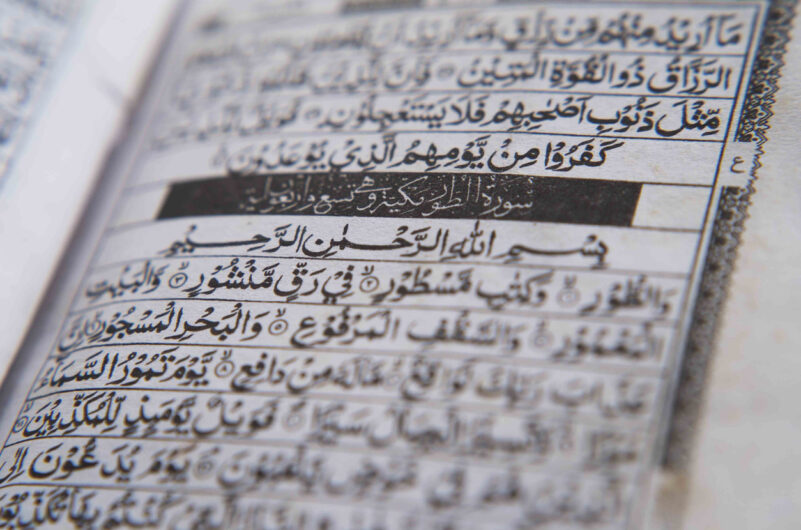
What makes Arabic distinctive is how history, religion, policy, and education shaped its stable written form alongside highly variable spoken dialects.
At the core of Arabic lies Modern Standard Arabic (MSA; fuṣḥā in Arabic), the formal written register and the spoken form used in prepared, professional contexts such as education, government, media, and cross-regional communication. MSA is no one’s mother tongue. It is a high, formal, supra-regional register learned almost as a second language and entirely through literacy and schooling. A close analogy to this would be Latin, as it was learned in Europe until the mid-20th century (Versteegh, 2014), particularly in law and medicine. MSA is the only fully standardized, pan-Arab form of Arabic.
Around this core exists a constellation of regional dialects, including Egyptian (maṣri), Levantine (shāmi), Gulf (khalīji), Maghrebi (maghārbi), Iraqi (ʿirāqi), and others. None function as a true alternative standard to MSA, yet these dialects are the true mother tongues of Arabic speakers. They differ in pronunciation, daily vocabulary, and most importantly in grammatical structure. Some are mutually intelligible while others are not (Holes, 2004).
This register-layered system is known as diglossia: one high (formal) variety and multiple low (vernacular) ones, each with clearly defined social roles (Ferguson, 1959).
The Arabic Writing System
Arabic uses a consonantal script (an abjad), written from right to left. In this system, short vowels are typically omitted, while long vowels are written explicitly. Diacritics – small marks added to letters to modify pronunciation – can indicate vowels, but in most adult texts they are absent. The design behind MSA assumes readers already know the language well enough to infer pronunciation from context.
For example, imagine English written like this:
plnng dcmnts rqrs cntxt
(“Planning documents requires context”)
You can read it because consonants anchor meaning and the vowels are implicitly predictable.
For example, consider the written sequence k-t-b:
كتب
can mean kataba (he wrote), kutub (books), or kitāb (book), depending on context.
This ambiguity is a feature that allows a single written form to serve speakers of very different dialects because dialects vary based on how the vowels are pronounced. Egyptians, Moroccans, and Saudis may pronounce words differently, but they can all read the same text without modification (Daniels & Bright, 1996). For example, a Moroccan Arabic conversation may be largely unintelligible to a Gulf Arabic speaker, yet both can read the same newspaper article in MSA and understand it perfectly.
Stability of the Arabic Writing System
One of the most striking features of Arabic is the longitudinal stability of its written form. Classical Arabic – the language of the Qur’an – was standardized between the 7th and 9th centuries. Modern Standard Arabic is not identical to Classical Arabic, but it remains deliberately conservative and structurally close to it (Versteegh, 2014).
Because the Qur’an is considered the literal word of God in Arabic, its language acquired sacred status. This elevated Arabic from a regional language to a transnational one and discouraged major reforms to its grammar and script. Unlike English, French, or German, Arabic has largely resisted orthographic and structural reform.
Standardization, Policy and Identity
MSA is primarily a written language, with a limited and highly specific spoken role. It is maintained through school curricula, government and legal usage, news media, and pan-Arab publishing. Language academies in Cairo, Damascus, and elsewhere issue recommendations for standard Arabic, but no single authority across the Arab world fully controls how it is used. Standardization is achieved through institutional consensus rather than everyday speech (Holes, 2004).
This creates a paradox: Arabic is one of the most standardized written languages in the world, yet one of the most diverse spoken ones.
Governments across the Arab world have actively reinforced MSA through education and administration. This was especially important after independence from colonial powers, where Arabic became a symbol of national and cultural identity (Suleiman, 2003).
At the same time, dialects remain politically sensitive. Promoting a dialect as a written standard could be seen as threatening pan-Arab unity. As a result, dialects flourish in speech, entertainment, and social media instead.
Register Switching in Everyday Arabic
Arabic dialects are fully developed linguistic systems with their own rules. They handle daily life, emotion, humor, and informal interaction far more efficiently than MSA ever could. In this sense, MSA resembles post-Roman Latin: a stable, formal register used for education, policy, media, law, and professional communication.
The key difference is grammatical structure. Dialects are acquired in childhood and follow their own verb, tense, and negation systems. MSA relies on a separate set of grammatical rules that must be learned through formal instruction.
Arabic is designed for register switching. MSA is used for writing, formal speech, and cross-border communication, while dialects are used for daily interaction. Educated Arabic speakers move between these registers constantly, often within the same conversation (Ferguson, 1959).
A rough English analogy would be switching between communicating an idea written in formal legalese in an instututional contract and translating the same idea downstream to street-level language any lay person with basic literacy can understand. In Arabic, however, this shift also includes the use of different grammar.
One Meaning, Two Grammars
Negation, tense and verb shape are register-specific and hence the worst offenders in Arabic diglossic system. English functions differently, so it’s not possible to clearly illustrate them through translated examples. Here are two Arabic-English examples that provide at least a tiny glimpse into Arabic’s grammatical switching.
Example 1:
Arabic (Levantine dialect):
ما ناقشنا هالنقطة
Literal translation: “Not we-discussed this-point.”
Loosely comparable English:
“We didn’t discuss this point”
- Dialect negator (ما)
- Past verb used and directly negated
- No register switching; pure dialect
MSA:
Correct MSA requires rebuilding this sentence to:
لم نناقش هذه النقطة
Literal translation: “Did-not we-discuss this-point”
Comparable English:
“We did not discuss this point”
This MSA sentence has a new grammatical structure. Visually, notice that it looks quite different.
The differences are:
- Switch to a higher register
- Switch in negation system
- Change in verb tense and shape; present-form verb used with past meaning
- The verb was re-inflected
In English, this difference is not noticeable because it’s purely stylistic. Unlike in Arabic, the register stays neutral, verb doesn’t need restructuring and it’s easy to paraphrase.
Example 2:
Arabic (Levantine dialect):
ما بفهم هالزر شو بعمل
Literal translation: “Not I-understand this-button what it-does.”
Comparable English:
“I don’t understand what this button does.”
MSA:
لا أفهم وظيفة هذا الزر.
Literal translation: “Not I-understand function this the-button.”
Comparable English:
“I do not understand the function of this button.”
This is grammatically correct MSA but unnatural and too stiff for social interaction.
The Language of Arts and Poetry
Across much of the Arab world, collectivist culture places strong value on maintaining relationships by fostering meaningful conversation.
In many Arab countries, especially in the Gulf, the average household traditionally includes a majlis, a formal sitting room reminiscent of a “living room” or “family room” in other cultures. A typical majlis is arranged to encourage comfortable social gathering, lined with wall-to-wall seating, carpets and cushions. Its size and form vary widely depending on space, income, and urban versus rural setting. It is specifically designed to welcome guests and encourage relaxed, face-to-face conversation over coffee, tea, and shared time.
For centuries, poetry has been used to record history, express loyalty, mourn loss, celebrate love, and even settle disputes. Its patterns of rhythm, repetition, and imagery have shaped how Arabic is spoken and appreciated. Its speakers make it sound warm, to acknowledge the listener, to create a sense of connection even in simple exchanges. Greetings are often extended, inquiries about well-being are sincere and repeated, and expressions of kindness and respect are built directly into everyday speech. The interplay of clarity in communication, of humor and affection gives Arabic discourse a distinctive emotional texture.
Humor emerges through the language’s imagery and rhythm. Arabic lends itself to playful exaggeration, vivid metaphors, and familiar sayings that can be reshaped to suit the moment. Much of the humor lies in how it is phrased: the cadence, the choice of words, the shared cultural references behind them. Even serious conversations can carry an undercurrent of lightness, signaling comfort and mutual understanding.
Affection is expressed through generous use of endearments, diminutives, and relational phrases that simultaneously acknowledge closeness and respect. Expressions equivalent to “my dear,” “my heart,” or “may you be well” appear frequently in conversation, even in relatively formal contexts, reflecting a communicative style that values the human connection.
Arabic is deeply expressive. Ideas are allowed to unfold, to be reinforced with eloquent courtesy or phrased in a way that resonates emotionally, with a nearly poetic phrasing, when compared to English. Conversations often move fluidly between seriousness and levity, precision and playfulness. To a foreigner this may sometimes seem unnecessarily elaborate, perhaps even exaggerated, but for Arabic speakers it simply reflects a communicative norm in which language is expected to carry emotion, respect, as well as information.
Limits in Machine Translation and Voice Systems
Arabic poses persistent challenges for voice and machine translation systems (MT), including those using large language models (LLM), because it operates with more than one grammatical system. Most MT systems are optimized for Modern Standard Arabic, because it’s the only fully standardized written form of the language. With LLM assistance, MT can produce usable MSA with relatively light post-editing, but it still cannot reliably generate good quality dialect variants or even hybrids of MSA and dialects. It continues to encode formality as a stylistic adjustment instead of switching to the appropriate grammatical structure of the desired dialect, or between the dialect and MSA.
This limitation becomes more obvious in spoken applications. Without reliable grammatical output, MT systems struggle to produce natural-sounding Arabic dialects. Even when the output appears fluent, it often lacks native intuition and requires full retranslation.
Voice-response systems further amplify these issues. MSA sounds unnatural in daily spoken interaction, while dialect is essential for content meant to be heard, responded to, or emotionally processed. Using MSA as the default in electronic output in these contexts introduces cognitive friction for the end user, which can affect comprehension and response quality. This becomes especially problematic when interactive voice response systems are used for eliciting sensitive information from individuals living with cognitive impairment, or from expats who haven’t yet acquired full fluency.
Since Arabic has no single spoken standard and until LLM engines can reliably handle fluent and natural-sounding dialect generation, human translators remain essential for producing effective spoken Arabic.
Using Arabic Translations
For translation, localization, education, healthcare and commercial enterprises, lack of familiarity with Arabic’s language system leads to expensive errors. MSA does not function like a spoken lingua franca across the Arabic. Its low-affect register makes that socially incompatible. Both dialect Arabic and MSA have their designated roles in the Arabic language system, and to ensure comprehension and response quality, one cannot be substituted for the other.
How Santium contributes to this space
Santium provides professional translation and language services for organizations working with complex, high-stakes content in. multiple languages and international markets. We support written, spoken, and digital materials through expert translation, review, and validation workflows designed to preserve the integrity of the source content and its intended function. Whether content is technical, scientific, medical, or audience-sensitive, Santium helps ensure multilingual communication doesn’t lose its intended meaning.
References
Ferguson, C. A. (1959). Diglossia. Word, 15(2), 325–340.
Holes, C. (2004). Modern Arabic: Structures, Functions, and Varieties. Georgetown University Press.
Versteegh, K. (2014). The Arabic Language. Edinburgh University Press.
Badawi, E. (1973). Mustawayāt al-ʿArabiyya al-muʿāṣira fī Miṣr [Levels of Contemporary Arabic in Egypt]. Dār al-Maʿārif.
Suleiman, Y. (2003). The Arabic Language and National Identity. Edinburgh University Press.
Daniels, P. T., & Bright, W. (1996). The World’s Writing Systems. Oxford University Press.
Ryding, K. C. (2005). A Reference Grammar of Modern Standard Arabic. Cambridge University Press.
Albirini, A. (2016). Modern Arabic Sociolinguistics. Routledge.
Habash, N. (2010). Introduction to Arabic Natural Language Processing. Morgan & Claypool.
Owens, J. (2006). A Linguistic History of Arabic. Oxford University Press.
Curious about how the world’s languages work?
If you found this article interesting, follow me on LinkedIn or subscribe to our newsletter. In our language series, I explore interesting traits of the world’s languages, from the most widely spoken to obscure, introducing their structure and word formation to cultural nuance and their role in social norms.
Stay connected and don’t miss the next edition!

|
Thank you for signing up. |



Monika Vance
Managing Director | SANTIUM
My work sits at the intersection of linguistics, scientific and medical translation, psychometric measurement, and multilingual operations, where terminology, usability, and regulatory context must align. I write about scientific and medical translations, psychometrics, languages, and the operational challenges that inevitably come with them. I also teach translators how to properly translate and validate complex psychometric instruments to hone their expertise in linguistic validation.