If you’ve been translating clinical outcome assessments long enough, you must have at some point been forced into adapting its content in one way or another. And yes, it’s OK to do that. In fact, it’s essential. Here, I will begin to tackle this industry-controversial topic as it relates to COAs, with introducing the linguistic concepts that are used to do it. Then, we’ll move into the hair-raising stuff.
Transcreation and transadaptation go beyond literal translation. Collectively also referred to as “cultural adaptation”, they recreate creative, branded, conceptual, and culturally nuanced content so that intent, impact, emotional resonance, and user experience are preserved (or enhanced) in the target language and cultural context.
Think of them this way:
Translation moves words. TransAdaptation and TransCreation move meaning; in different depths.
What is TransAdaptation?
Transadaptation is a translation process used when the original concept is valid in the target culture, but the exact wording cannot be transferred without changing its meaning.
For example, a symptom description, instruction, or behavioral term may exist in both cultures, but the literal phrasing carries a different intensity, medical nuance, or implied assumption. If translated word-for-word, the target audience might interpret it more narrowly, more broadly, or differently than intended.
Transadaptation corrects this by modifying specific words, adjusting phrasing, clarifying implied meaning, or recalibrating tone so that the target audience understands the concept in the same way as the source audience. The underlying idea does not change, only the linguistic expression does.
In short: The concept works but the wording must be adjusted to preserve it.
What is TransAdaptation?
Transcreation is a translation process that goes further; it is used when the original concept, framing, or reference does not work in the target culture at all. So it must be replaced with something (equivalent) that does.
This may happen when a message relies on a culturally specific metaphor, humor, social norm, value assumption, adaptive behavior, linguistic concept or strategic positioning that works in one place but has no relevance, or produces the wrong reaction, in the target market. In these cases, preserving the original angle would reduce effectiveness or become meaningless.
Transcreation keeps the objective (e.g., motivate participation, build trust, increase engagement) but allows the message to be rebuilt using concepts and framing that resonate locally. The structure, examples, tone, and narrative approach may change substantially from the source.
In short: The original framing does not work, hence the message, or item (hair-raise alert), must be reconstructed to achieve the desired outcome or intended measurement.
The best way to convey these concepts is through some real-world examples. Below are case examples from marketing, aerospace, and clinical practice and research.
TransCreation in Practice
Transcreation becomes essential when the concept does not align with how a market thinks, speaks, or consumes.
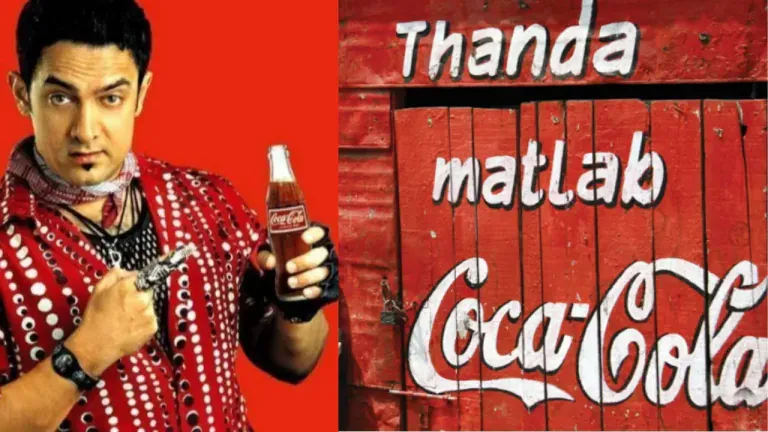
CASE EXAMPLE 1: The iconic ‘Thanda Matlab Coca-Cola’ advertising campaign
When Coca-Cola re-entered the Indian market in the 1990s, it initially relied on its global positioning built around themes such as “Enjoy!” While effective in Western markets, that messaging did not resonate broadly across India, especially in rural regions where brand attachment was weaker and purchasing behavior differed from urban consumer patterns. Facing strong local competition, Coca-Cola realized that simply translating its global slogan will never secure meaningful market share, especially in rural areas.
Through the influence of its local campaign team, the company reframed its strategy around life in India. India’s intense summer heat and everyday language became the central themes.
In colloquial Hindi, “thanda” means “cold” and is commonly used to refer generically to a cold drink (a “coolie”). By default, consumers did not ask for a brand name, they asked for a thanda. The campaign “Thanda Matlab Coca-Cola” (“Cold drink means Coca-Cola”) leveraged humor and culturally familiar storytelling to link the brand directly to relief from the heat.
The brand’s main strategic objective – dominance in the soft drink category – remained constant around the globe, but the conceptual route to accomplish it shifted in India to align with local life and language.
The campaign reframed how the target market thinks about the brand. The shift in the message resonated so strongly with its target audience that more than 20 years later, Coca-Cola is still synonymous with ‘thanda’ across India.
That shift is a textbook example of transcreation. Learn more about this campaign from its director here.
CASE EXAMPLE 2: Phonemic Verbal Fluency (F-A-S)
Many of you have probably played the phonemic fluency game Scattegories in one form or another. In the clinical world, many neuropsychological assessment batteries designed to measure cognition include phonemic verbal fluency tasks such as:
“Name as many words as you can that begin with the letter F in 60 seconds.”
In English, the commonly used letter stimulus set (F-A-S) was selected because:
- The letters yield a comparable number of valid word candidates in the English lexicon.
- They produce manageable difficulty.
- They avoid excessive proper nouns or morphological bias.
However, this task cannot be directly transferred into many other languages, because:
- Letter frequency distributions differ.
- Phoneme–grapheme relationships differ.
- Some languages are syllabic rather than alphabetic.
- Some languages use non-Latin scripts.
- Some letters generate either too many or too few lexical options.
For example:
- In Spanish, F-A-S produces a very different word yield profile, hence P-M-R is its primary set.
- In Mandarin Chinese, there is no alphabetic letter-based retrieval that works the same way, so verbal fluency is measured with a different system.
- In Japanese, kana-based syllabaries fundamentally alter retrieval mechanics; also measured with a different system.
- In Arabic or Hebrew, morphological root structures change how initial-letter constraints operate.
If you simply translate the instruction and keep the same letters, you change task difficulty. The test then no longer measures the same construct under comparable conditions.
In this case, translation and even transadaptation are insufficient.
The letter set itself must be reconstructed based on phonological frequency analysis in the target language. New letters, or syllabic units for different writing systems, must be selected to replace the approximate comparable lexical density, similar diffculty or equivalent executive retrieval demands.
This is not a translator’s job. Translators experienced in transcreation may provide some guidance, but they’re not trained in psychometrics, so you must provide the replacements. We’ll get into that later in this series.
Other examples include:
- Word-order manipulation tasks which are dependent on grammatical language structures.
- Language acquisition and development milestone measurements.
- Symbol translation tasks in IQ assessment.
- Symbol-Digit substitution tasks in IQ tests.
- Reading irregular words in dyslexia assessment batteries.
- Knowledge tests which are based on local educational curricula.
- Adaptive behavioral norms, and so on.
TransAdaptation in Practice
Transadaptation becomes essential when the construct remains valid but the wording must be modified to protect it.
CASE EXAMPLE 1: Airline Safety Instructions
Consider a standard aircraft safety instruction:
“In the event of a loss of cabin pressure, oxygen masks will deploy automatically. Pull the mask toward you and breathe normally.”
The safety concept is universal. Every airline must communicate the same procedure. The structure of the instruction remains stable across markets.
However, direct translation can introduce subtle but potentially dangerous shifts in interpretation.
For example:
- “Deploy” does not have a natural equivalent in all languages and could be translated as “fall,” which changes the perceived mechanism and the passengers’ expectations.
- “Pull the mask toward you” must clarify direction and action precisely in certain languages; literal phrasing may imply removing the mask instead of securing it.
- “Breathe normally” can be misinterpreted if the target language distinguishes between shallow breathing and calm breathing differently.
The concept does not change. The safety procedure does not change. Creative reframing is not necessary. What changes is the phrasing needed to ensure that passengers interpret and execute the instruction correctly within their linguistic framework.
CASE EXAMPLE 2: Preserving Meaning in Clinical Symptom Reporting
Consider a patient questionnaire – a Patient-Reported Outcome measure (PRO) – that asks:
“Have you felt slowed down?”
In English, this phrase can capture psychomotor slowing, cognitive dulling, or generalized fatigue, depending on clinical context. The construct may be intentionally broad. Some measures are also worded with improper grammar etc., but let’s assume that the broad wording here is intentional.
In some languages, a literal translation of “slowed down” implies only physical immobility. In others, it may suggest laziness or lack of motivation. In still others, it may not exist as a natural expression at all.
If translated word-for-word, patients in different countries could interpret the question differently. That changes what is being measured. Consequently, the conceptual variation in their responses impact the interpretability and clinical meaning of collected data sets, and potentially influence diagnostic decisions.
The concepts associated with this wording all remain valid across cultures. But the phrasing must be adjusted to preserve the intended contextual meaning. Transadaptation may involve clarifying the type of slowing, adjusting intensity markers, or selecting a culturally neutral expression that captures the same clinical nuance.
That is classic transadaptation.
Translators: Linguistic Competence in Cross-Cultural Adaptation
Transadaptation and transcreation require a higher level of competence than standard translation. Fluency alone is insufficient. Both processes demand the ability to evaluate how meaning is constructed, how cultural context shapes interpretation, and how linguistic structure affects comprehension or performance.
In the translation industry, you get what you pay for. This level of competency does not come at $0.06 per word, even if you work with the linguist directly. The economics of living don’t permit this kind of work for that kind of return on the investment. So if you see this rate, or similar, on your invoice, it’s unlikely that you’re getting what you need.
For transadaptation, linguists must be able to:
- Detect when literal translation alters conceptual meaning.
- Distinguish semantic similarity from functional equivalence.
- Adjust phrasing, tone, or specificity without changing the underlying concept.
- Recognize connotative shifts that affect interpretation.
- Work within structured, documented decision frameworks.
In healthcare and clinical assessment contexts, this also requires sensitivity to construct and protecting its integrity. Minor wording changes can alter how a symptom is reported or how a behavior is interpreted. This work is analytical, disciplined and prioritizes precision over creativity.
Transcreation requires controlled creative competency. Linguists must be able to:
- Identify when the original framing will not resonate in the target culture.
- Reconstruct messaging to achieve the same objective.
- Adjust tone, metaphor, and narrative logic appropriately.
- Preserve strategic intent while modifying surface structure.
- In cognitive and neurodevelopmental assessments, this may involve rebuilding test items when cultural or linguistic structure makes direct transfer impossible, while also preserving the construct being measured.
Transcreation requires high cultural intelligence, structural awareness, and strong judgment.
The overall goal in cultural adaptation is to achieve the same action through linguistically and culturally valid means.
How Santium contributes to this space
Santium applies structured linguistic validation, clinimetric insight, and culturally informed workflows to protect the psychometric integrity of translated outcome measures.
Follow Santium to stay connected
If you found this article interesting, follow me on LinkedIn or subscribe to our newsletter. In our COA series, I explore the psychometrics hiding under the hood and the translation methods for clinical outcome assessments – from simple rating scales to complex neuropsychological batteries. I introduce their constructs, phrasing, concepts being measured, and how cultural nuance and age-based norms impact the translation process.
Join me in elevating the quality of COA translation through a psychometrically-driven perspective.
Stay connected and don’t miss the next edition!

|
Thank you for signing up. |



Monika Vance
Managing Director | SANTIUM
My work sits at the intersection of linguistics, scientific and medical translation, psychometric measurement, and multilingual operations, where terminology, usability, and regulatory context must align. I write about scientific and medical translations, psychometrics, languages, and the operational challenges that inevitably come with them. I also teach translators how to properly translate and validate complex psychometric instruments to hone their expertise in linguistic validation.