

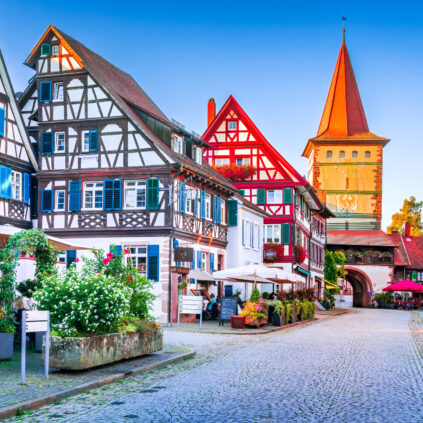
The German Language: A Dialectal Continuum
German is one of Europe’s most influential languages, but it is not a single uniform language. It is a constellation of regional dialects spoken across Austria, Germany and Switzerland, with a standardized common form that is learned in school.

How Ancient Greek Endures as the Language of Science
Many of the words used in science today were born in Greek. Mathematics, philosophy, democracy, astronomy, psychology and medicine all trace their roots to this language. Long before laboratories and universities existed, Greek thinkers were inventing vocabulary for ideas that would shape science and intellectual thought all around the world.

Zulu: One of Africa’s Most Powerful Languages
Zulu, or isiZulu, is one of Africa’s most widely spoken indigenous languages. It is the first language of more than 12 million people and understood by many more across South Africa.

The 4 Tones of Mandarin Chinese
Chinese speakers sing their words. Tones create meaning. Change in the pitch changes the word. Learn what the four main tones sound like and how they work to create words and phrases.
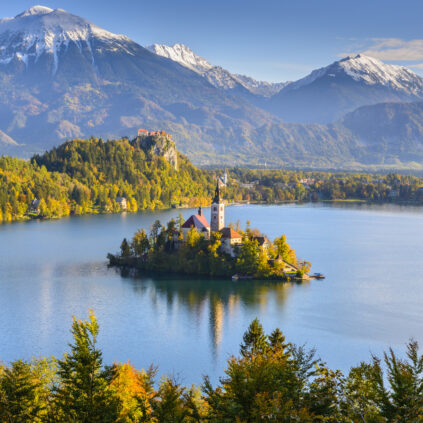
The Slovenian Language: Small Country with a Remarkably Complex Tongue
Slovenian is one of Europe’s smallest national languages but it carries a depth and complexity that far exceeds its size. It’s intimate, soft and its rich inflection lends itself to lyricism and poetic expression. Tucked between the Alps and the Adriatic Sea, its speakers are a multilingual, thoughtful and pragmatic society, with a deeply embedded outdoor culture.
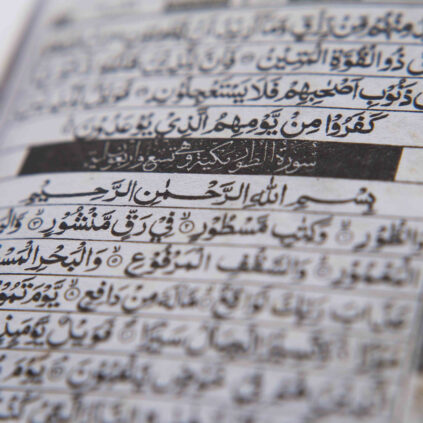
Arabic and Its Writing System: A Shared Script Across the Arab World
Arabic is spoken across more than twenty countries in the Middle East and North Africa. It functions as a language system with a shared written standard and a wide range of spoken varieties that can differ as much as Spanish and Italian.

Italian: The Language of Romance and Waving Arms
The Italian language is melodic, deeply expressive, and elegantly romantic. Shaped within a culture of animated debate, intellectual masterpieces, unrushed meals around crowded tables, masterful craftsmanship, world-defining music, and landscapes that are like open-air galleries.
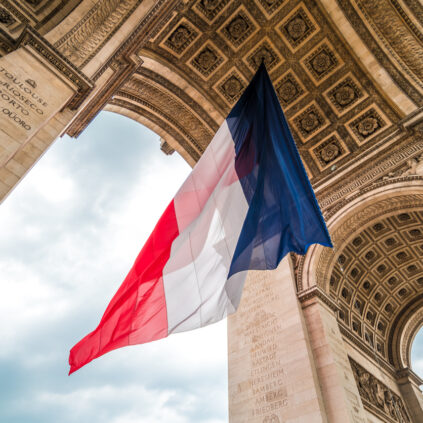
French Is Global. Why French Doesn’t Have a Universal Variant.
Why isn’t there a French equivalent to LatAm Spanish or Modern Standard Arabic?
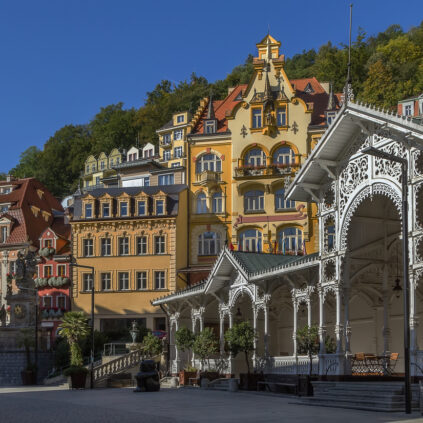
The Czech Language: Precision With Inventive Wordplay
Czechs enjoy their language. Its razor-sharp lexicon and creative linguistic elasticity allow it to pivot effortlessly between bureaucratic precision and playful, socially inventive wordplay. In speech, this produces rhythmic compact slang with highly specified expression that can land with a friendly punch of dry humor. The ability to play with words is woven into Czech identity and a shared sense of belonging.

15 Interesting Facts About Chinese Languages
Chinese doesn’t just look different on the page. It also works differently in the mind. Its writing system encodes meaning rather than sound. Its grammar leaves time, number, and reference largely to context.


